The best of both worlds?

There is no decision that we can make that doesn’t come with some sort of balance or sacrifice.
– Simon Sinek

IMG_8013
One of the things I like best about where I live is the view. I grant you it isn’t one that everyone would enjoy but I don’t feel the need to sell anyone on its particular attractions. From the small deck in my back yard, I look across Courtenay Bay (part of the Port of Saint John for those of you who might be unfamiliar with the geography) to an oil export terminal. Beyond the terminal, a closer look reveals a wallboard plant, a power plant and, before giving way to natural landscape, various structures with the centerpiece flame that marks an oil refinery. In the distance and to the right, all the way to Red Head, a ridge of greenery completes the horizon, one where the moon is wont to rise and cast its light upon the bay. Full moon at high tide provides the best display, but even when the tide leaves mud flats exposed, the reflection can mesmerize.

2014-12-21 09.23.28
A couple of years ago or so, when my wife was still alive, we thought about giving this place up. We looked at one house in particular, on the West Side, that had a great many features we appreciated. We went so far as to have a tour of the property and we came away intrigued but not yet convinced. I remember talking about it in the car as we were driving back home. Much of what we had seen was easy to like but we were unsettled, unsure, without knowing precisely why. We were ready to give ourselves some time to allow the impressions to settle but when we walked up the front steps, stood on the porch and looked out to Red Head across the water, any thoughts of leaving were abandoned. For whatever reason, we were attached to this very contradictory view.

I say contradictory because few panoramas offer such a stark contrast between the manmade and the natural. While Saint John has many other pockets of industry, the conglomeration of activity from the waterfront to the refinery and everywhere in between is without parallel. Among the many things I’ve learned watching the ships come and go is just how quickly the turnaround is and how constant the traffic. A ship comes in on one high tide and leaves a couple later at most. And with few exceptions, another eager vessel is waiting to take its place. Watching tugboats turn large ships displays both power and agility. Taken altogether, it is fascinating. I never tire of it.

IMG_8577
Courtenay Bay itself provides lots to see. I follow the tide tables and thoroughly enjoy the ebb and flow. Invitations for photographs present themselves almost daily regardless of time of day or season. For all that this body of water is a commercial centre, it still illustrates the persistence of natural forces. My imagination frequently tries to conjure an image of the tidal action of the Bay of Fundy and I have my own little laboratory just out my front or back door. As I said, the view is not for everybody but I’ve grown ever fonder of it through the years.

Many people find the industrial landscape disheartening. They lament the ruination of the natural scene and I do understand such sentiments. Wouldn’t it be nice if we could eliminate all industrial blight and return the land to its original state? Environmental orthodoxy would answer quickly and forcefully “yes”! As for me, I just don’t think it’s that simple. However much we need to be responsible stewards of our environment, we need to recognize equally that the commerce I can observe on a daily basis contributes in large measure to our being able to enjoy a standard of living that is second to none in the world.

2014-12-21 08.53.07
My Courtenay Bay scene provides the perfect study in contrasts. Smokestacks, the persistent hum of machinery, ships coming and going, all set against a backdrop of cold Atlantic seawater and rolling greenery stretching into the distance. As a believer in moderation, I have a hard time with extremism on any front. Those who object to industrial growth and development in virtually any form are no better than those who would ignore every environmental concern for the sake of a profit.

IMG_3178
My view across the Bay tells me that we, humanity, are here and we are having an impact. It could not be otherwise. At the same time, it reminds me of the natural beauty that is part of our heritage, a beauty and a heritage that we need to protect. Unless we believe that abandoning all of the amenities of modern life is the way to go, we need to come to an accommodation that reconciles those two seemingly opposing views. As with so many things these days, the public debate might lead you to believe this is a stark either/or question. No surprise, it’s not that simple. “Accommodation” is the key word here, and it works both ways. Balance is seldom easily obtained but rarely has it been so urgently needed.

Change? Really?

“Real governing – governing on behalf of all is hard. So in modern politics you govern to win the next election. Governing is fully subordinated to the politics of winning – but win for what? Why, to win, of course. You win to win. You win so the other guys don’t win. You win not to lose. You win because you can.”
Graham Steele, What I Learned About Politics: Inside the Rise – and Collapse – of Nova Scotia’s NDP Government

The above excerpt, taken from the book by Nova Scotia’s former NDP Finance Minister has an eerily familiar feel to it. Anyone who knows me would be aware that I have long been a fan of George Orwell’s 1984, not for the popularly held notion that it outlines some kind of condemnation of communism and/or other forms of authoritarian control, but rather for the always evolving ways in which I come to understand certain of Orwell’s observations. Of necessity, his dark, dystopian tale deals in extremes.

government 2
I’m happy to report that, in my opinion, we need not fear the advent of anything resembling the world of his novel. But, as I say, I have continually found elements that predict trends of a sort or, at the very least, that cause me to reflect on his general prescience. Consider the following explanation that O’Brien provides to Winston of what makes “The Party” different from all such entities that have come before:

The Party seeks power entirely for its own sake. We are not interested in the good of others; we are interested solely in power. Not wealth or luxury or long life or happiness; only power, pure power. What pure power means you will understand presently. We are different from all the oligarchies of the past in that we know what we are doing. All the others, even those who resembled ourselves, were cowards and hypocrites. The German Nazis and the Russian Communists came very close to us in their methods, but they never had the courage to recognize their own motives. They pretended, perhaps they even believed, that they had seized power unwillingly and for a limited time, and that just round the corner there lay a paradise where human beings would be free and equal. We are not like that. We know that no one ever seizes power with the intention of relinquishing it. Power is not a means; it is an end. One does not establish a dictatorship in order to safeguard a revolution; one makes the revolution in order to establish the dictatorship. The object of persecution is persecution. The object of torture is torture. The object of power is power.

To restate what I hope is the obvious: Graham Steele is not suggesting that we are on the verge of an Orwellian nightmare. But the parallel between his claim that “You win to win” and Orwell’s “The object of power is power” is striking, at least to me. And, I can add my voice to Steele’s in support of his contention that winning is all that matters in today’s political arena. I was elected to the NB legislature in September of 2010. Many times after that people asked me, especially as the next election was drawing closer, when the campaign began. My answer was always the same: “the day after the last election”.

government 1
I don’t want to overstate this fact; if you have any hope of following through on promises, agendas or programs that you care about, being elected is absolutely necessary. At the same time, as Steele points out, the danger lies in forgetting all about the things that matter in deference to what becomes the more important and central concern of being elected or re-elected.

Unlike Steele, I’m not so sure that it has ever been much different, at least since the advent of modern democracies. The prerogative of being elected is inescapable when the very starting point of any hope for anything is dependent upon that reality. At the same time, such a point does not sit well with anyone, either in office, or from the outside looking in, when the rhetoric around politics concerns itself with matters of great significance to all of us, even to those don’t pay a great deal of attention to the specifics of government.

I was listening to Rex Murphy the other night and he was reflecting on the sorry state of public debate, a common theme these days. His particular interest was in attack ads and how they present such a dilemma. On the one hand, most people I know decry them as distasteful at best. At the same time, experience seems to suggest that they work.

government 3
All of this was offered in light of the changing fortunes of the federal NDP. I’m not alone in wondering how the NDP victory in Alberta might affect the election this fall. I’ve been around politics enough now to realize that people are cynical to a degree that shouldn’t come as a surprise in this age of instant access and information overload. If you keep beating on any drum long enough, sooner or later, the sound will be heard by even those least prone to listen.

Dissatisfaction seems to be the prevailing trend. What interests me (and Rex Murphy and many others) is whether we have reached a tipping point. Are people sufficiently angry and fed-up with the status quo to lash out and consider a federal NDP victory? That would require all those who have never voted NDP out of a belief that doing so is a wasted vote to reconsider that view. Rex believes that the first sign of such a possibility would be a Conservative attack ad aimed at Tom Mulcair rather than Justin Trudeau. Interesting.

government 4
If this fall’s federal election results in such a dramatic swing, no doubt a good many in the country will be looking expectantly for a sea change in the way things are done. For that to come to pass, the newly elected NDP government would have to abandon the notion of winning as their prime motivation. What’s the chance? We’ll have to wait and see.

While traveling with Rush and friends

“Democracy requires citizens to see things from one another’s point of view, but instead were more and more enclosed in our own bubbles. Democracy requires a reliance on shared facts; instead were being offered parallel but separate universes.”
― Eli Pariser, The Filter Bubble: What the Internet is Hiding From You

While travelling by myself in the United States last week, I managed to kill a few hours on the road by tuning into a favourite distraction of mine whenever I’m enduring the monotony of traffic on the interstate: talk radio. For anyone who is a fan of CBC, please do not confuse Canada’s public broadcaster with what I’m referencing. Specifically, I had two days of Rush Limbaugh supplemented with one morning where I got to listen to a guy subbing on the Glen Beck “program”, not “show”, the latter term, I’m guessing, having been judged too frivolous for something as weighty as a Glen Beck product.

Rush 1
If you’ve detected a measure of derision in my tone regarding these two luminaries of American media, good for you. Listening to these guys and others of their ilk is a perilous journey from frustration to dismay to occasional laughter and any number of other responses. The two programs and their respective hosts share certain oft-repeated themes: President Obama is responsible for – through such things as Obamacare, efforts to conclude a trans-Pacific trade deal and the like, his handling of ISIS and foreign policy in general – all that is wrong with America; the “American Left” doesn’t care about America or the constitution; questions regarding the conduct of police throughout America are an affront to law enforcement and entirely misplaced. You get the picture.

Just about everyone talks about their guilty pleasures; well, this is one of mine. I find these guys fascinating. Rush was the one, in particular, that I managed to listen to for the better part of six hours over two days and, as I said, my responses can’t help being all over the place. A friend of mine, when I told her what I had been up to, commented that I must have been swearing and exclaiming all the way down the I-95 and she was spot-on.
Rush 2

Someone might rightly ask at this point: why do you bother? As I said, though, “fascinating” is the best adjective for how I regard the experience. At times, the extremity of opinion seems to me to be so far from any intelligent regard for the facts that I can’t help exclaiming “are you serious?!?” For example, in Rush Limbaugh’s world view, as far as I can figure out, racism is not a factor in any dealings the police have with African-Americans. Such purported racism does not, in fact, exist and that is all there is to it. Also, in case you were wondering, no good idea can conceivably emerge from a Democrat. Rush, therefore, admits he is mystified that some Republicans have come out in support of President Obama’s approach to trade. In Rushworld, such support is prima facie evidence of derangement, something akin to making a deal with the devil, as far as I can tell.

For all that I find it funny in a certain way, I can’t help reminding myself that this guy and others like him represent a certain mainstream element of public opinion in the United States, however crazy and extreme such opinion might seem to me. And, when I listen to such programs, every once in a while, something is said that has a kernel of truth or good sense, even if the truth or sense has been distorted by the bizarre way in which the Rush Limbaughs and Glen Becks choose to talk about such things. When I consider the polarization that so many have remarked upon as being a defining feature of the political culture of the USA, I am thankful that we haven’t gone so far here in Canada.
Rush 3

At the same time, I am worried by the trends I see at home. More and more, there is a tendency in public discourse to paint things in the stark and simplistic terms that have triumphed in that bizarre radio world I was listening to last week. Stephen Harper is a dictator and the federal Conservative Party is engaged in an ongoing assault upon the very core of our democratic principles; Justin Trudeau is nothing but the pretty public face of a party that is fundamentally morally bankrupt and without ideas; Tom Mulcair (if you’ve even heard of him) and the NDP are in the pockets of large unions and will sacrifice everything in pursuit of a socialist agenda. Conversely, the Conservatives (and Harper) are the only party that can be trusted to manage the economy, protect families and keep us safe; the Liberals are the only ones who can reassert cherished Canadian values, heal our violated criminal code and restore Canada’s standing in the world; the NDP alone can ensure justice and fair treatment for the middle class, protect the environment, and bring about the change the electorate constantly seeks (apparently).
Rush 4

Happily, Canadians, by and large, don’t seem as easily drawn to the rank partisanship that has become so frequently displayed in the United States. At the same time, as we approach a federal election in the fall, I am concerned about the increasing trend toward such divisiveness. Columnists, advertising, and news reports more frequently portray our choices in stark, oppositional terms. Trying to understand why we are so drawn to this model had a great deal to do with my starting this blog in the first place.

Rush Limbaugh’s view of the world has the virtue of simplicity. In his bizarre take on just about everything it all comes down to “us vs. them”. The basic service he offers involves defining who “they” are so that we might position ourselves very clearly on the “us” side. When our world, however you might define it for yourself, changes as rapidly as it does these days, it’s nice to have some kind of anchor that reassures us all is right with that world. However, while the simplistic characterizations of people and of events so frequent in the USA can be comforting, they are fundamentally destructive. They breed a deep and abiding cynicism that is, itself, evidence of gross oversimplification and a failure to consider issues in depth.

Canada may not be there yet but I fear we are on the road to that place. I hope the campaign to come federally proves me wrong. I hope Canadians realize that the choices before us are variations on a theme rather than between virtue and vice. The parties have to take some responsibility for ensuring that such is the case but I believe we all have a responsibility in this regard. Each of us, like it or not, is a testament to the truth that we only and always get the government we deserve. At least in a democracy we do, and we are lucky enough to live in one.

And they call it democracy

Many forms of Gov­ern­ment have been tried, and will be tried in this world of sin and woe. No one pre­tends that democ­racy is per­fect or all-wise. Indeed it has been said that democ­racy is the worst form of Gov­ern­ment except for all those other forms that have been tried from time to time.
– Winston Churchill (House of Com­mons, 11 Novem­ber 1947)

“If Bolivia and Bulgaria can do it, surely we can, too”. Such was the wisdom offered by a commentator I heard this morning in reference to the election result this week in Prince Edward Island. The “it” that we should be able to do if we follow the lead of our South American and Eastern European confreres is proportional representation, a topic that comes up just about every time a majority government is formed with something less than 50% of the electorate choosing the victorious party. In the PEI case, the popular vote favoured the Liberals by around 4% apparently, even though they won more than double the number of seats of their closest competitor, the Progressive Conservatives.

Alberta 2
Yesterday’s election in Alberta provided an even more interesting result. Beyond the fact of an NDP majority – a result that will be analyzed and watched for all kinds of reasons – note that the PCs managed only 10 seats to the Wildrose Party’s 21, even though the PCs outdistanced Wildrose by 28% to 24% as far as the popular vote goes. Interesting in its own right, I would say. The cynic in me imagines that the same people who complain about the proportional MISrepresentation in other elections probably won’t be quite as vocal when it comes to this nugget. As for me, I’m satisfied that Canada’s particular approach to democracy has proven itself yet again: those who took the time to vote can be confident that their votes were counted properly, that no one tried to stuff a ballot box, and that the transition from almost 44 years of PC rule to the new NDP government will take place peacefully and with grace.

By now you may have figured out that I’m no fan of proportional representation. My lack of dismay at the Alberta case might cause some puzzlement but such seemingly skewed results in Alberta are a small price to pay for a system that has provided peace, quality of life and, according to a recent assessment of happiness worldwide, fifth place in the world when happiness is measured. As for the last, I can’t help but provide such a statistic with a little tongue-in-cheek. I’m hard pressed to think of how such a thing could ever be measured in a way that would stand up to hard, scientific analysis. Nevertheless, it’s fun to have such stats, I suppose, and I would guess it’s not all that far off. In light of so much that we see of the world on a daily basis, who could blame us for being a little more than simply satisfied with life in Canada.

Alberta 1
As for Bolivia and Bulgaria, I’m not sure where they polled on the happiness index but I know they didn’t surpass us. And while I know the speaker who referenced these two countries did so more for rhetorical effect than to suggest we should emulate either in its entirety, I disagree with the core argument anyway. For all its seeming defensibility, proportional representation, to my mind, is in no way inherently superior to our own first-past-the-post system. And that last word is the most important: system.

Having recently been retired from elected office, I have seen the system from the inside although, to date, I have chosen to write only a little about that experience. For my purposes here let me say, simply, it is as imperfect as anyone who has spent time criticizing politics might imagine. The people who populate government and opposition, whether elected or civil service, are prey to all the flaws and foibles that afflict any human enterprise. For all that certain constituencies want to demonize politicians in particular, the people I met were just that, people. Each had his/her strengths and weaknesses as anyone would. Being constantly scrutinized by many who would look for any opportunity to vilify you might understandably lead to a certain reticence and reserve, but I did not meet the moral bankruptcy that some would have us believe is the common denominator among politicians.

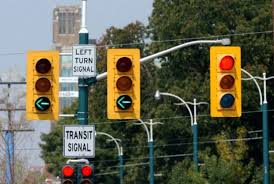
My point, simply, is that politicians are us and should not be considered the same as the system in which they work. The system, as it turns out, is bigger than any of us. We might ask, what is the system intended to do? Think of it in a simpler context: what is a “system” of traffic lights designed to do? Ensure the proper flow of traffic. What is an electoral system supposed to do? Hmmm.

Alberta 4
The answer to the latter, of course, is far more complicated than the traffic light example but I do believe all systems that provide governance have a united purpose: stable, effective government. Churchill famously complained about the horrors of democracy, noting that its saving grace was simply that it was better than any of the alternatives. And, as we have come to realize, democracy can come in a number of flavours. And it just so happens that I like ours.

Regardless of its purported inequities, our first-past-the-post, party system tends to provide governments that can conduct business without the gridlock that has become the norm even for our neighbor to the south, a country which practices a kind of hybrid of ours where party affiliation does not necessarily mean uniform policy. And as far as I know, not many Canadians spend their time wishing they could trade places with the USA.

In the end, I simply want to acknowledge two things: our democratic system is far from perfect and will, no doubt, change with time, maybe even finding its way to some brand of proportional representation some day; at the same time, the system as it exists has given Canadians much to be grateful for and we should never allow ourselves to lose sight of that. The cynicism I so often hear expressed fails to recognize that and it galls me.

Alberta 3
As well, as the Alberta result shows, surprises can still occur. For all that many feel, at times, that we are locked in a seesaw battle between dominant elites out of touch with the day-to-day reality of “ordinary Canadians”, the long view would suggest that even in Canada, the political landscape can change. Just ask Jim Prentice.

Criticizing critical thinking

Critical thinking is thinking about your thinking while you’re thinking in order to make your thinking better.
― Richard W. Paul

I’m struck today by the irony implicit in the conception of this blog of mine. “Unabsolutedotcom” exists as a result of my frustration with what I see as persistent oversimplification in just about everything that touches upon our lives, but especially as it manifests itself in public discourse. And yet I try – in some 900-1000 words usually – to unravel that same complexity. While that might strike some as more than enough to dedicate to such a project at one time, I frequently feel constrained.

problem 3
Getting lost amidst the details (the devil’s in them, as the saying goes) constantly threatens clarity, but then I shouldn’t be surprised by that either. No matter the story in the media (I choose that as a reference point since so much of our grasp of current affairs is controlled by what we read, see or hear through print, television and radio), seldom do we learn much beyond the statement, the proclamation or the conclusion.

To be fair, in many instances, we really don’t need much more. If our concerns are limited to a bare understanding of events or facts without qualification, then our conventional media sources can be commended for doing a fine job. As I’ve noted in previous blogs, never have we had so much information so easily accessed (maybe “acknowledged” is a better way to put it since I’m at the end of a very long list when it comes to noting that). I’ve finally arrived at a point in my own life where I seldom sit around wondering how I will find an answer to something only to have it occur to me that the answer is literally an entry on my smartphone away. “Automatic” is the best word to describe my readiness to turn to the nearest electronic device whenever I am looking for simple information.

problem 2
What about reflection and analysis, though? A common theme these days (especially in education, my favourite topic) concerns the need for critical thinking in all kinds of situations. This information age of ours, however, creates a habit of mind that discourages such thinking. For that matter, I’m not even sure that we really mean “critical thinking”, per se, at least not my understanding of the term. “Problem-solving” better describes what most are looking for, which is a VERSION of critical thinking that is well-suited to an age of technological innovation.

Lo and behold, the entire notion of criticism falls victim to over-simplification and serves to further illustrate the difficulties inherent in even trying to address the issue. Instead of critical thinking being a vehicle whereby we illuminate the nature of a problem, where subtleties and nuance are revealed, or where questions are developed, refined or discovered, we pursue it solely as a means to a particular end.

Once again, my personal pursuit – of the more nuanced version of critical thinking – demands that I qualify the previous paragraph. The pursuit of a particular goal through critical thinking isn’t a bad thing. Of course it isn’t! But neither should that be regarded as the ONLY valuable use to which it might be put. The best critical thinking allows us to go wherever the mind might lead us, to confront the uncomfortable, to consider things in ways that might have eluded us and yes, to find solutions to problems that may have been, themselves, unclear to begin with. Allowing for critical thinking of the best kind, you might say, is the defining element of a free society.

problem 1
So why am I ranting about this today, you might ask? No surprise to anyone who has been reading this blog (or listening to my ponderings throughout the years), a story regarding education got me on a tear. The president of the New Brunswick Teachers’ Association was offering his opinion that a proposed cut to the budget of the Department of Education would decimate education in the province. Of particular interest to me as I read the article were his references to two studies conducted over the last ten years, both of which deal with the subject of inclusion in schools. To be clear, I do not want to discuss inclusion itself at the moment. If you are not even sure what I mean when I say “inclusion”, that’s okay, too. I will come back to it on another day.

All of this is happening in the context of the provincial government asking departments to suggest what cuts of between 5 and 10 percent in their budgets would look like. I don’t even want to spend time considering how problematic such an exercise is in and of itself. Considering the inherent complexity of anything as massive and varied as our public schools, such calculations can’t help but seem like a fool’s errand to me but that too I’ll save for another day perhaps.

No, what bothered me most was how the article suggests that the NBTA and its leadership fail to even question the assumptions that drive the system. Haven’t they heard enough to know that the current system is already in big trouble?!? If the article is reporting accurately and thoroughly, the lone response from the representatives of professional educators is to challenge any planned cutbacks exclusively on the grounds that resources currently are insufficient to ensure that policy is implemented as outlined.

problem 4
I’m not surprised, though. It’s easier to spend all of your critical thinking energy on trying to solve the math problem of the budget than it is to look closely and CRITICALLY at WHY schools are not improving even as the budgets increase and teacher-student ratios are the best they have ever been. The best critical thinking tends to make us uncomfortable and few nowadays, especially in the public arena, have the stomach for that.

There ain’t no rabbit in that hat

The complexity of things – the things within things – just seems to be endless. I mean nothing is easy, nothing is simple.
– Alice Munro

What do you THINK? Have you been asked that lately? Chances are you have been, whether through a telemarketer who fooled you by having a blocked number causing you to answer the phone anyway, or simply in conversation with friends. Our thinking on just about any topic is the very definition of conversation, after all. Who is going to make the playoffs? What you think of the government and its latest policies? Events in your neighbourhood? Family matters? Life? The universe? Everything? If you’ve ever tried to define what makes human beings different from the rest of the animals, some reference undoubtedly was made to our ability to reason and to contemplate our existence.

complexity 5
That being said, I can’t help thinking (there I go) we are living in a time when the ability to think carefully and constructively has become increasingly difficult. Okay, that isn’t quite right. As individuals, we have as much time for thinking as we might choose to provide for ourselves. If I want to sit at home with quiet music playing (a concentration aid for many), I can take time to ponder to my heart’s content. Maybe I’ll even pause now and then to take a note or two or even write something that comes to mind at greater length. No, my concern is not so much for the individual’s opportunity to consider whatever comes to mind. I do, however, wonder if an “exchange of ideas” is possible, or even likely, in the multitude of public forums that have become increasingly in demand.

For the sake of this blog, I am using “public forum” in a very restricted sense. Advertised as opportunities for members of the public to get together and voice their concerns regarding whatever issue has made the forum necessary, I seriously question their efficacy. Maybe, when the notion was first devised, such events actually led to a meaningful exchange of ideas and/or positions. More frequently, these days, if specific interest groups haven’t organized such gatherings, those same groups are liable to appear with a clear intention of hijacking the meeting for the furthering of its already decided and unshakeable stance.

complexity 2
These forums can go by different names. One that I attended a few years back was termed a “public information session”. Organized by proponents of a project that involved power lines that would skirt a residential neighbourhood, those with concerns came well prepared. The session was organized as follows: a representative of those with questions would provide a presentation, the proponent would do the same, and a Q &A would follow. Sounds good.

In my perfect world, the session might go like this: those concerned would outline any objections, questions, clarifications they might have/need; the proponent would seek to answer and to explain and maybe fill in any perceived gaps; a discussion/exchange would conclude the evening and all concerned would leave feeling they had a better understanding of the issues. As a follow-up, lines of communication would remain open and, hopefully, all concerned would feel heard even if the final result was not entirely to their liking.

complexity 4
In fact, it was more like this: the concerned side gave a very well conceived presentation, one that outlined their fears and suggested clearly why they were opposed to the project. The two most prevalent causes for their resistance were issues regarding property values (fears such values would decline) and health (studies showing that persistent exposure to high voltage lines can be harmful). They concluded that the answer to their concerns, as outlined, was to bury the lines.

An engineer for the project then came forward and described the plan and pointed out a couple of things: since the lines would be running adjacent to an already existing (and fairly heavily trafficked) rail line, any impact on property values would be negligible. He further pointed out that the lines would be so high in the air that they wouldn’t obstruct anyone’s view. Significantly, he described the lines themselves as at the lowest end of high powered lines. And the real kicker: burying the lines would actually bring the lines closer to people and, since being covered in earth in no way impeded whatever emissions accompany such things, any potential health hazard would be increased, not decreased. Surely that would be the game-changer.

complexity 3
As a disinterested observer, I might have thought that was the end of it. However, when all was said and done – a few questions and clarifications followed the presentations – one voice was raised above the others and proclaimed: “Bury the lines!!!” whereupon the assembly erupted in a raucous round of cheering and clapping. And I’m thinking: what about health concerns?!?

Am I making a mountain out of a molehill? I don’t think so. I use this event as a simple example of a much larger problem: we have little time these days for real debate of complex issues. Whether in letters to the editor, at public forums or in the media, little time is allowed for careful analysis and consideration. Virtually everyone arrives with minds made up and complains, after the fact, that they didn’t feel anyone really listened to them. Translated, that means those on the other side didn’t agree with what your side had to say.

complexity 1
We hear frequently about polarization of opinions and in politics, but I don’t think polarization is a cause of anything. Instead, I would argue it is a symptom of a modern world overwhelmed by information. When so much can seem so confusing and so complex, the simple answer, the slogan, the catchphrase, appeals to us. Even though the evidence is all around us that increasing complexity is only going to grow, we long for simplicity, even if it is illusory. Which brings to mind another old adage: be careful what you wish for.

Beware the ripple of inattention

O divine art of subtlety and secrecy! Through you we learn to be invisible, through you inaudible and hence we can hold the enemy’s fate in our hands.
– Sun Tzu

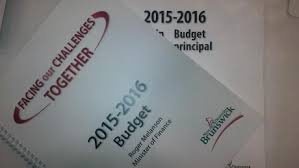
Following the release of the first budget by New Brunswick’s new government, I am tempted to comment but perhaps I will save my reflections for another time. Unfortunately, the unfolding escapades of politics are subject to the commonly recognized rule of the public’s attention span (a reality that causes me much consternation): today’s crisis/concern is easily supplanted by the next big thing that comes along.

ripple 4
Consider the last couple of weeks or so. Three things have engaged my attention, two of which in my estimation are of far less significance than the third. I’ll deal with it last. Prior to the release of the budget, the Atcon scandal took centre stage thanks to the release of the Auditor-General’s report on the “fiasco”, a designation that is undeniable, however much the Auditor-General chose language far less value-laden.

In no way do I want to deny just how bad that particular situation became. Who could deny that a decision (or series of decisions) that cost the taxpayers of New Brunswick something in the order of $70,000,000 was a bad one? Add to that certain of the details surrounding the decisions and it certainly stands as a truly scandalous waste in light of the fact that so little of the amount is proving to be recoverable. Questions swirl regarding who received what, where the money is now (if, indeed, it was more than funds on paper that simply evaporated in the ether somehow), who can be held accountable, etc. Perhaps with time some answers might be forthcoming but did you notice how quickly it has dropped off the radar?

ripple 7
The budget came along and it has caused sufficient outrage on a number of fronts to push Atcon to a back burner somewhere, at the very least. Time will tell if it can be revived as an issue for politicians, the media and the public. As for the budget itself, criticisms are coming from many fronts: seniors groups see it as an attack on a largely vulnerable group that has already paid its dues and shouldn’t be asked to pay more; university students are especially upset by the cancellation of the tuition rebate; rural communities are unhappy. I’m hard-pressed to think of anyone who is actually saying anything good about the budget. The closest thing to a positive comment that I’ve come across are some business reps who suggest that the budget isn’t all that bad even though it didn’t go far enough.

ripple 3

ripple 2
Taken altogether, the reaction to the budget seems pretty much par for the course. As I’ve noted in a previous blog, everyone is happy with change and wants something done about the problem (in NB’s case, a spiraling debt and persistent deficits) as long as it doesn’t affect them. Dissatisfaction with a budget has to be unavoidable even at the best of times, to say nothing of our current critical situation, one acknowledged by all as dire and in need of serious attention.

What Atcon and the budget share, however, is a common good intention. However bad the decisions surrounding Atcon have proven to be, I continue to believe that they were conceived out of the common hope that government funds might generate jobs and help people. That is not to deny that politics, nepotism and who knows how many other considerations didn’t play a role; I simply cannot accept the wholesale demonizing that results from the need to portray your opposition as utterly and entirely venal, a reality arising as a result of the oversimplification of complexity that I have spent so much time decrying.

As for the budget, what can I say? On a personal level, I haven’t seen much that I like but, at the same time, I do not believe that the current government is setting out to destroy New Brunswick, its economy and its people any more than previous governments. I can think they are utterly wrong-headed in their approach to many things (and I do) without resorting to questioning their desire to do some good.

ripple 5
As for the third thing that I believe is more significant, it didn’t really gain much attention. It was a line item in the newspaper as part of an article looking at the current government’s reversal of a number of bills implemented by the last but it didn’t garner much in the way of a public reaction. I’m referring to the repeal of the Fiscal Transparency and Accountability Act. If you’ve never heard of it, I’m not surprised. It isn’t the kind of thing that can lead to protests, petitions, or outrage in general. And, yes, that makes me sad.

Among its many particulars, this piece of legislation required two things that I see as a great loss: regular reporting by government departments of their adherence to established budgets and an independently verified costing of election promises by political parties in advance of an election. Once again, if you’re yawning at the mere mention of something so lacking in fodder for scandal, I can’t blame you. We are not conditioned to pay attention to what goes on with our governments until such time as it can awaken outrage.

ripple 6
How I wish I could sweep away both Atcon and the budget and force people to consider the repeal of this act. For the first time in history, government departments were going to have to do something that individuals and successful enterprises take for granted: account for their spending habits. At the same time, having independent verification of the cost of an election promise might have forced parties to abandon some of the more extravagant promises that, after the election, so often lead to laments among the public when they go unfulfilled.

ripple 1
Boring you say? Perhaps, but, as we have so often heard, “the devil is in the details”. When we ignore such details in service of our appetite for the sensational and the immediate, we can miss the more lasting impact of subtle changes. Atcon may persist but it is an event which will fade; this year’s budget will be replaced by another next year. Both are of the moment. The repeal of the Fiscal Transparency and Accountability Act is not unlike the stone thrown in the lake: the ripples will be felt for a long time to come.

What is it we deserve?

“Every nation gets the government it deserves”.
– Joseph de Maistre, 1811

I’m sure we all recognize the quotation above, even if the form might have been altered slightly to fit the occasion. Most importantly, it’s necessary to consider this statement as it applies to democracies. I would hate to think that the author of the original could have foreseen a Pol Pot, a Stalin, or a Hitler and still imagined that his assertion was absolute. At the same time – very much in line with the general theme of my blog – the division between government and the governed is at best a blurred line, often even in the most exceptional circumstance. History has shown very clearly that Hitler was the popular choice when he initially assumed power. Generally, though, I want to believe that the despotism evident in so many places in the world isn’t what most people would choose. Am I being a starry-eyed optimist for holding to that? Perhaps.

promises 6
Still, here in Canada, the adage, by and large, holds. No matter how much is ascribed to “tactics”, in the end, those elected are the ones who have garnered the most votes on election day. Dirty tricks notwithstanding (since they have a way of being discovered if anyone is dumb enough to try them in the first place), Canadians can have confidence that the results on election day are a valid expression of the “will of the electorate” on a given day. Sure, voices might object based upon the first-past-the-post system, poor turnouts at the polls and other considerations but, as far as the process goes, few would deny that the results themselves are valid and verifiable. Such is the nature of a democratic election in Canada.

Once that day is passed, however, we all have to live with the result for the four or so years of an electoral term. Ordinarily it doesn’t take long for the knives and hatchets to come out. Letters to the editor in local papers, articles in national ones, analysis across a variety of mediums all tend toward the negative. Other than the few partisan stalwarts who regularly contribute to the local paper, few kind words are forthcoming for a government in power. If you think about it, that dynamic reveals a rather curious reality: governments elected by virtue of their being the most popular on the day of the election almost invariably decline in popularity within a brief time. Indeed, time and again the previously popular choice eventually becomes the reviled or, at the very least, the dismissed.

promises 5
A simple explanation of this phenomenon would hold that parties fail to live up to their promise (and their promises). This demand for absolute adherence has always struck me as being at least as unrealistic as so many of the promises that go unfulfilled. When we consider again the notion of getting the government we deserve, I think we need to recognize that, if we are looking to play the blame game, we have no one to blame but ourselves. I’ve been involved in enough elections (and paid attention to many more) to know that certain contradictory realities occur virtually every time.

promises 3
First, consider the predominance of “change” as a popular theme. I cannot think of an election I have been involved in personally that did not have change in some slogan, approach or appeal along the way. Whether it is parties or individuals, those seeking to oust whoever is currently in government are going to promise some kind of radical departure from whatever is current. As for those in power at the time, even alongside a “stay the course” message, some enhancement of what is currently in place will be promised. All of which makes perfect sense since the objective of every politician and party is to win. When dissatisfaction dominates the messaging of virtually every news medium, who wouldn’t want something else?

But then the election is over and the time comes for the implementation of some of those changes. Offsetting the ever-present demand for change is the equally pervasive resistance to that same change. A commonly acknowledged truth about people’s demand for change says that change is welcome as long as it doesn’t affect them. And so, with a guaranteed chorus of discontent growing apace, governments proceed to make changes where they can, thus fulfilling portions of an election platform while guaranteeing that general popularity will decline.

promises 2
Second, repeatedly, around election time, calls are heard for parties to be straightforward and up front, to avoid promises of any kind and just – to use the parlance so popular these days – “be open and transparent”. Needless to say, that one doesn’t get much traction. Without going into detail, I would state simply that on the few occasions when parties choose such an approach, they are seldom, if ever, rewarded. However much they claim otherwise, the electorate at large isn’t looking for a description of what is; they want a vision of what COULD be, no matter how many times those elected based upon the presentation of such a vision fail to deliver.

promises 1
I think what de Maistre actually captured in his comment about our receiving our just deserts was a truth about all of us. Human beings are inherently complex and contradictory so it shouldn’t come as a great surprise when our political system – especially a democratic one – reflects those characteristics. In my opinion, the greatest disservice done to politics today arises from the persistent negativity so much the focus of media. Yes, ours is an imperfect system populated by flawed people. But the system itself has delivered a quality of life second to none in the world. Surely a scurvy politician or two deserves some of the credit.