Fear itself

Always do what you are afraid to do
– Ralph Waldo Emerson

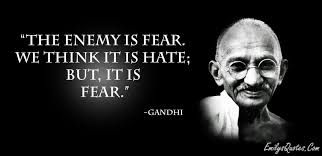
Fear: it’s in the air. No matter where I go, regardless of the occasion, if I run into someone I haven’t seen in a while, the conversation eventually comes around to the question of Syrian refugees. And beneath virtually every opinion offered on the rightness or wrongness of Canada’s plan to welcome 25,000 souls to our shores before the end of 2015 lurks that undeniable element of fear.
fear 1
We occupy a privileged position here in Canada and, even more so, here in our little enclave on the East coast, far removed from the metropolises of Europe and elsewhere where the threat of yet another ISIS/ISIL outrage must feel incredibly imminent. The effectiveness of ISIS/ISIL’s approach to intimidation cannot be overstated. The unlimited scope of their attacks has put all of us on edge in a way that no group, in my memory, has ever been able to do.

Attacks on embassies, war ships, even the World Trade Towers, have the perverse logic of being symbols of something identifiable that the radical group opposes. In the latter case, in light of what we see as the inherent innocence of the victims (people going about their business, doing their jobs), the logic is profoundly offensive, but at least we can follow it: World Trade Centre as symbol of U.S. economic imperialism, etc., etc., etc.

fear 5
But Paris? What did anyone killed or wounded in that attack do? What was the landmark, the symbol, the thing that shouted “offensive” in the twisted minds of the death cult that pretends to have something to do with religion called ISIS/ISIL? A concert? A soccer match? A restaurant? As others have noted, the randomness of the targets is the very thing that has made them so effective. By striking somewhere that has no obvious benefit, the message is clear: everyone, everywhere is in the cross-hairs unless you are with us.

No wonder fear is evident, even here in small town New Brunswick.

But I’m here to add my voice to those who cry out against that fear. I am not suggesting that we abandon healthy caution but, as in all things, we owe it to ourselves and to those who are more immediately affected by the ongoing calamity in Syria and Iraq to not allow fear to overwhelm our better instincts. Never have I felt so in need of perspective.

fear 6
For the friends that I have talked to about this, the central concern is the obvious one: extremists infiltrating the ranks of refugees in order to insinuate themselves into positions where they can cause harm. That’s where that privileged position of ours comes in. With the exception of Air India decades ago and the lone wolf attacks in Ottawa and Quebec last year, we have largely been free of extremist attacks in Canada.

What’s it like, I’ve often wondered, to live in a place where the young girl approaching you across the square might be a suicide bomber, or where the car sitting idly outside a building might be rigged to detonate at any moment? What is it like, in other words, to live in a place where the threat of violent death is, realistically, a constant?

fear 3
And at that moment, I realize that that is not Canada. Here on the periphery of the violence that afflicts so much of the world, we look upon it with dismay and are grateful that it so rarely has an impact upon us. So, naturally, if we can be convinced to fear that same violence making its way to our shores, we will object to any action that could lead to that. Understandable.

Don’t get me wrong: I’m nervous. The world is looking like a dangerous place and the barrage of images of carnage and cruelty beyond measure in conjunction with the overreactions of crazies who want all refugees banned and tests of Christian belief administered, etc., all contribute to putting just about anyone on edge. At the same time, my rational self demands that I take a step back and act in spite of any visceral fear.

fear 2
While it might sound like overstatement, I really do think this issue is about Canadian identity. We cannot contend that we are (or aspire to be) the world’s most inclusive and fair-minded country while demanding that Syrian refugees pass litmus tests we would apply in no other circumstance. As I’ve tried to understand my own fear, I’ve further attempted to grasp just what it is we imagine needs to be done in addition to any current screening already applied to refugees.

Because the date, the end of the year, appears arbitrary, I hear myself saying that we need to abandon that. Even as I say it, I realize that my “logic” in saying so isn’t based on anything other than an unsettled feeling inside myself – fear, in other words. “Can’t be too careful” to quote the old adage.

fear 4
And I know we can’t! But what makes me think that the agencies responsible for such things in Canada are suddenly going to abandon caution and forego the responsibility they have for ensuring all of our safety? That just isn’t the Canada I believe in and those aren’t the Canadians I know.

The bottom line is I have to work on it – my fear, I mean. Because I am afraid. Canada has as much of a chance of being subjected to some kind of attack as anywhere else. But that is not, I have to tell myself, the same as welcoming refugees fleeing from a misery that I can’t even imagine. Emotion is as transferable as a bad cold, maybe even more easily spread, and I think we can all point to bad decisions we’ve made in our lives when emotion got the best of us. Let’s not let the same mistake get the best of our country. Too many lives hang in the balance.

When ideology matters more than life itself

Do not believe ISIL is manageable
– Jeanne Shaheen

Around this time last year, I was traveling in Europe and one of my objectives was to visit Auschwitz. I have been a student of the Second World War – especially the Holocaust – since as early as junior high school. I still remember reading William Shirer’s The Rise and Fall of the Third Reich in grade 8. Ever since that early exposure I have continued my struggle to understand the minds behind what stands, for most people, as the greatest crime ever perpetrated by human beings.

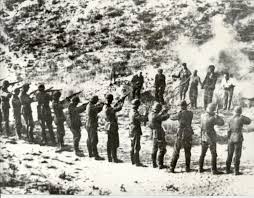
I can’t say that the day I spent at Auschwitz unlocked any door to understanding although it did deepen my mystification at humanity’s capacity for cruelty and extend my appreciation of the enormity of the undertaking itself. As I toured the interpretation panels and rooms in the main camp before continuing on to Auschwitz-Birkenau (the extermination camp), architectural drawings of the infrastructure of death at Birkenau were chilling. No skull and crossbones or other insignia graced the pages. I could have been looking at plans for the construction of a local Wal-mart. The design itself was ingenious, ensuring a rapid processing (from assembly, to killing, to cremating, to cleaning up) of as many as 5000 people at a time.

Auschwitz 1
Among the most affecting elements of the displays for me, though, was a simple picture taken of the unloading of the trains at the siding made famous in Schindler’s List, Sophie’s Choice and a myriad of other films chronicling elements of the Holocaust. What caught my eye wasn’t what was happening in the background – men, women and children being herded on a platform while soldiers and dogs patrolled the scene; rather, I was drawn to two figures in the foreground. They appeared to be lower ranking personnel just slightly above the regular ranks and their backs were turned to the scene unfolding behind them. One of them was smoking a cigarette.

In tune with my Wal-mart comment earlier, remove the background context and these guys could have been having a smoke-break behind a restaurant or on their break before returning to their desks. Their detachment was palpable. I imagined possible elements of their conversation: “So, Hans, how was the game last night?” “Could have been better, but I played well. How’s Frieda?” “Well, she had the surgery and the prognosis is good. We’ll know more in a couple of days” “Tell her I said hello!” And so on. This wasn’t a picture of horror (although it was); rather, it was a photo of “just another day at the office”.

The Jew always lives from the blood of other peoples, he needs such murders and such sacrifices. The victory will be only entirely and finally achieved when the whole world is free of Jews
– Julius Streicher

More than anything, it is that ability to stand apart from what is happening and see it as normal that always gets to me. When I was back from Europe, I supplemented my trip to Auschwitz with a BBC documentary on the subject and one part of that brought the point home to me even more. An interviewer was talking to an elderly gentleman who had been part of the Einsatzkommando during the war. This was a special force that accompanied the regular army as it advanced the Eastern front. Its mission was to round up Jews and execute them. The focus of the interview was on one week in particular where this guy had taken part in an “action” that saw him and his cohort kill at least 10,000 and bury them in a mass grave.

Auschwitz 2
When asked what he felt as he was participating in this, the gentleman responded: “nothing”. The interviewer, trying to remain objective, struggled to hide her consternation and asked him to explain: “they were the enemy; they had destroyed our businesses and were out to destroy us”. When he was asked to supply any specific example from his experience of the enemy doing any such thing, he couldn’t but that in no way shook his conviction that, indeed, those he had participated in killing were the enemy. My rational self wants to cry out: “Women?!? Children?!? Babes in arms?!? The Enemy?!?!?!”

But I know it’s pointless. The longer I’ve thought about it and the more I’ve read along the way, the more convinced I am that I will never be able to penetrate the mystery of human cruelty and our uniquely human ability to convince ourselves that even the worst conceivable action is justifiable.

I write about this today as I struggle to process the events of this past weekend in France, another of those events, similar to 9/11, that serves to focus our attention on something that remains at the periphery of our concerns unless, like all of those refugees fleeing the battlegrounds these days, it touches in some way upon our more immediate world. I join with every other voice in the world that wants to see the perpetrators of this particular outrage held to account.

At the same time, I hope we can work to understand who and what it is we are up against. Similar to Hitler, Nazism and the virulent anti-Semitism that fueled the Holocaust, no argument can be had with ISIL/ISIS. Sadly, for this immediate case, nothing can be said to bring the adherents of this particular group back from the brink. Most important, for all of the world that opposes the actions of ISIS/ISIL, is to know and understand who we are fighting.

Its rise to power is less like the triumph of the Muslim Brotherhood in Egypt (a group whose leaders the Islamic State considers apostates) than like the realization of a dystopian alternate reality in which David Koresh or Jim Jones survived to wield absolute power over not just a few hundred people, but some 8 million. – Graeme Wood http://www.theatlantic.com/magazine/archive/2015/03/what-isis-really-wants/384980/

To put it another way, this is not a fight against some radical interpretation of Islam, against Muslims, against “the other”. It is not a fight to “preserve our way of life”. We are faced with a group that, through its own particular logic, has arrived at the conclusion that the individual life has no value other than the way in which it can be used to serve the ends of its ideology. Similar to Hitler, this is fanaticism at its most perilous. That which most of us (we like to think we are the norm) hold to be the greatest value, the central miracle of the universe – our existence – is irrelevant to the ends of ISIL/ISIS.

Auschwitz 3
The Nazis and Hitler would not concede defeat until Hitler himself was dead and the “empire” he had created was reduced to a street or two in Berlin. We must remain united in our abhorrence of everything ISIL/ISIS does and be prepared for a fight that may never be “won” in an absolute sense. History tells us that someone will always find a way to believe that life isn’t as important as some cause or ideology or other.

The struggle today, where ISIL/ISIS is concerned is to recognize that this group does not represent anything more than itself and those who adhere to its precepts. Xenophobes, ultranationalists and fanatics of other stripes will look at the actions of ISIL/ISIS and see a chance to further their cynical ends. Fear has always been fertile ground for hatred, intolerance, prejudice and support for oppression. For those of us who want to hold to our love of life and diversity and to values of acceptance and tolerance, we need to continue to remind ourselves and others that ISIS/ISIL is the latest manifestation of a recurring human horror. A certain appeal to religion might be the breeding ground for these maniacs, but an ISIS/ISIL suicide bomber is no more a Muslim than Jim Jones was a Christian.

After the election: of kittens and cabinets

The opinions that are held with passion are always those for which no good ground exists; indeed the passion is the measure of the holders lack of rational conviction. Opinions in politics and religion are almost always held passionately.
― Bertrand Russell, Sceptical Essays

Scan

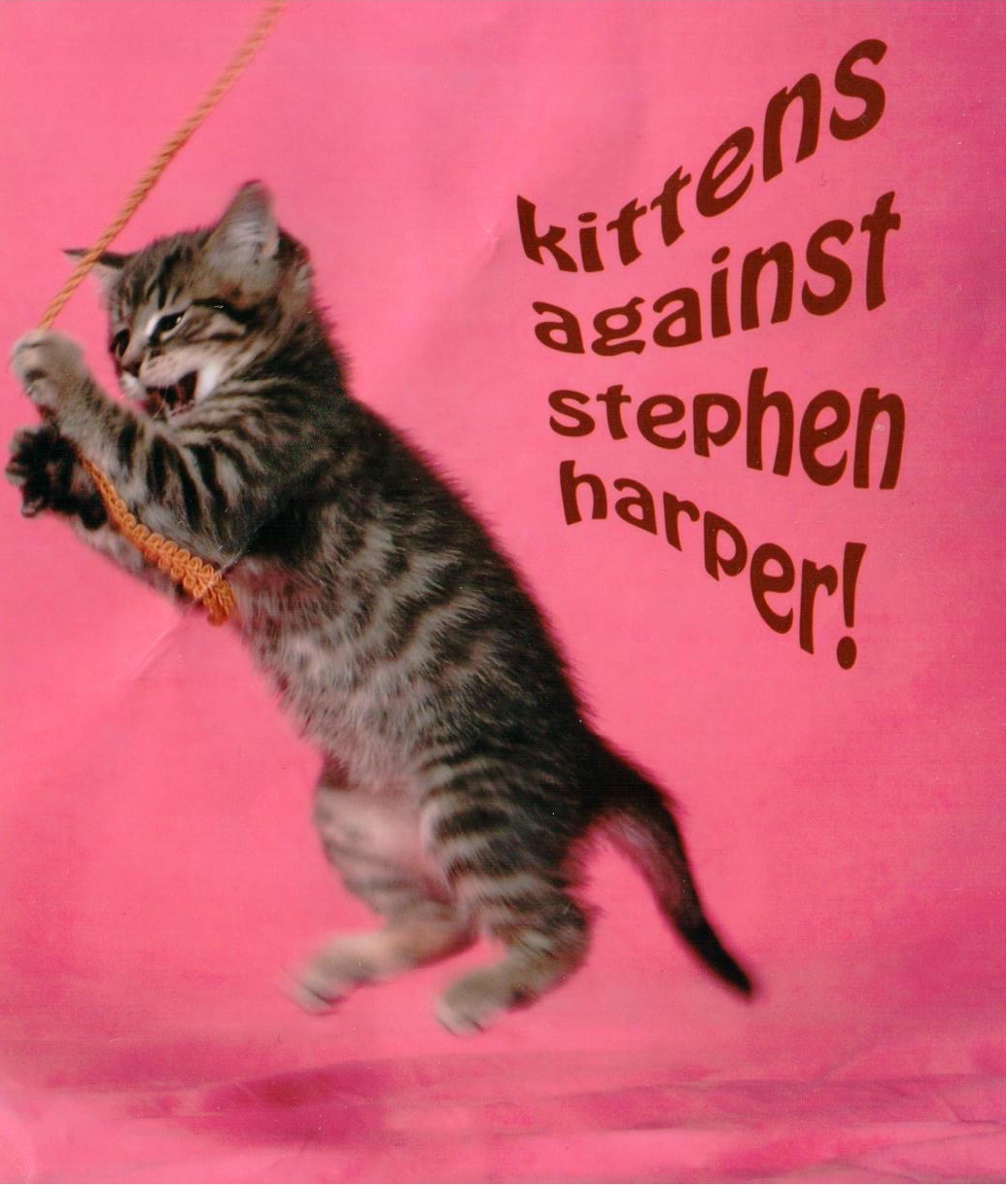
I found this “Kittens against Stephen Harper” posted on a fence in uptown Saint John and I just had to have it. I hope the poster can forgive me for absconding with it but it made me laugh so spontaneously (it still raises a chuckle) I couldn’t let it go. For me, whether deliberately or not, it captured the frustration I felt throughout our now-concluded federal campaign. As a number of my recent blogs have argued, that campaign showed signs of Canada drifting toward an American-style polarization of right and left that scared me. As a Canadian, rightly or wrongly, I have long treasured what I, and many others, see as our long history of moderation and tolerance. I’m hoping that the extremes we saw over the last few months are an aberration and that we are now “back to our old selves”, you might say.

Kittens against Stephen Harper? For all of the apparent exaggeration, it really did start to feel that way, at least among a number of the people I know. I can’t recall a time when so many were so animated in their “hatred” (is that too strong a word?) of a public figure in this country. It seemed as though the election was repeatedly drawn in the starkest of terms, very much an “us vs them” or, dare I say it, “good vs evil”. Some will say I am, myself, exaggerating the extremity of opinion but I don’t think I’m that far off. Mind you, much of what I’m using as the basis of my view is social media but the more mainstream media and personal conversations I had seemed to support my contention overall.

kittens 5
And the thing is, I’m happy to acknowledge that many things that Harper’s government did were objectionable to me personally. I was no fan of Omnibus Bills, extremes of message control, half-hearted action on climate change, paranoia on many fronts, mandatory sentencing, etc. That being said, I also hold that such actions were undertaken out of a view that they were in the interests of the country and its citizens. But, as I’ve had occasion to say to a few people lately, we live in an age where outrage is fashionable. As the words from Bertrand Russell above suggest, one of the easiest alternatives to a meaningful argument is strong feeling. Personally, I would have much preferred to hear more of the argument and less of the outrage. As for any final verdict on Harper’s contribution to the country, I’ll leave that to time and historians.

kittens 1
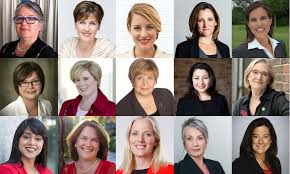
As I said earlier, though, I’m hoping that Canada, in the meantime, can return to its senses. And the actions of our new Prime Minister, so far, seem designed to restore all kinds of faith for all kinds of people. The optimism is near universal although, predictably, some have found things to complain about, most notably the composition of the new cabinet. The naysayers point to gender balance as inappropriate and a false requirement imposed at the expense of merit. My knee-jerk reaction to that one is to go “Really?!?” with a look of dismay plastered on my face but, in line with my own argument, an explanation is the better way.

kittens 2
A Cabinet Minister in Canadian legislatures – federal, provincial or territorial – certainly has a job to do in a specified arena of interest but to imagine that the background of an individual can somehow be the sole measure of qualification for the position suggests a misunderstanding, in my view, of both the role and the nature of the job itself. Justin Trudeau has done an admirable job of lining up ministers with portfolios that match elements of their professional and educational backgrounds – and that is certainly one thing to think about when making such choices – but the media has made me laugh with their comments on one appointee, comments that supposedly highlight this minister’s appropriateness for the portfolio. The minister in question? Marc Garneau, incoming Minister of Transport. He is, according to Peter Mansbridge and others, eminently qualified because, after all, as a former astronaut he’s been to space. You get it: he’s traveled a lot, so he’ll make a great Minister of Transport. Right?

kittens 3
To be clear, I’m not criticizing the choice. I am, however, pointing to the absurdity of imagining that one’s experience as an astronaut prepares you for such a role. Does anyone really think this compares to Harjit Singh Sajjan and his background in the military being chosen for Minister of Defense? Now THAT pick really does seem to line up.

kittens 4
In terms of the bigger picture, though, the composition of Cabinet has always been based on more than any apparent qualification based on background. Language, region, ethnicity, affiliation – any number of things can serve as legitimate considerations if you view cabinet composition as an effort to reflect the country it purports to represent. When you have 184 MPs to choose from, qualification, to my mind, is a given. Nothing I have read suggests to me that anyone in Cabinet lacks capability. That Justin Trudeau decided to proclaim through his choice that women deserve an equal representation at the table is a move I applaud. Does that mean such composition should be writ in stone? I would argue no. The message has been sent and we can move forward from here. The symbol can spread the message, even if the reality (true equality across the spectrum for women) will take time to come to pass.

And so Canada moves on and revels in the fresh blush of a new government and the end of any number of policies and attitudes that were found objectionable. Many who might have said they weren’t are once again happily and proudly Canadian. I hope we can hold on to that and never lose sight of the fact that each of us – if we find ourselves citizens or residents of this country – truly won the lottery just by virtue of being here. For now, the kittens are content but, make no mistake, they’ll be watching.

“The collective wisdom . . .”

Miranda: Oh, brave new world, that has such people in’t.
The Tempest 5.1.188-9

regime 6
Portions of Miranda’s line from The Tempest have been used in many ways through the years, most notably – and ironically – as the title of Huxley’s dystopian novel, Brave New World. References to Huxley’s work can’t help appearing whenever a political change comes which seems to usher in an era of great promise. As I read the reactions to last week’s election victory by Justin Trudeau and the Liberal party, I couldn’t help smiling. I had been bothered by the course of this election for quite some time and I was glad it was over, a widely-held sentiment, I’m fairly certain, from sea to shining sea.

regime 7
I don’t think anyone needs me to wax poetical about the power of optimism and hope, but the contrasting campaigns of the election serve to illustrate how it can work when the time is right. Please note that last part: when the time is right. We would be practicing a form of revisionist history if we failed to acknowledge that, in other circumstances, negative campaigns can be very effective. Just ask Stephane Dion or Michael Ignatieff if you doubt that. The number of campaigns south of the border scuttled by attacks far more vicious than anything we would think of mounting in the Great White North are legion.

As we heard from innumerable pundits over the last few years (if you were listening), the evidence is inescapable: attack ads work. At the same time, this conclusion, as with so many others, lacks nuance. Some make the point that negativity can backfire but it tends to be more as an afterthought than a rebuttal of the central tenet that tarring the opposition with any available brush works. As I listened to ongoing coverage of the election results, many expressed surprise, especially with the majority result. To understand, though, I don’t think you need to look beyond the central player in it all: us.

regime 1
I’m never sure how well my little part of the country reflects the larger collective so I always avoided making any sweeping claims about how things were going to go as the election approached. At the same time, I was struck by the depth and ferocity of the opposition to Stephen Harper and his Conservative government just about everywhere I went. Never before had I seen anything like the “Stop Harper” campaign that manifested itself in signs, hashtags, strategic voting and a whole lot of ways about which I probably know nothing at all. While it could have something to do with the circles I travel in, the feeling was palpable, it seemed, just about everywhere other than amongst the true stalwarts among Conservative supporters. As I’ve said in previous blogs, this polarization concerns me.

regime 2
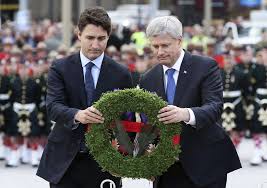
My hope, now, is that this particular election proves to be an anomaly; that Canadians will, by and large, return to the moderation that was celebrated in the media on the days following the election. The bitter rhetoric and enmity of the campaign was replaced by articles complimenting the rapid concession from Mr. Harper and his congratulating Mr. Trudeau while affirming that the electorate was always “right”. In turn, the two leaders appearing together and cordial while laying a wreath at the Tomb of the Unknown Soldier reminded us that we were Canadians, after all.

For me, though, that’s where caution comes in. The Liberal victory has an inevitable character in retrospect. Alone among the three major party leaders, Justin Trudeau hitched his wagon pretty much exclusively to the mantra of hope and change and, quite simply, people were ready for that, longing for it, in fact. People, by and large, want to feel good about themselves and their choices. For the moment, I’m with them. Most people I know seem cheerier this week and that can’t be bad.

regime 3
But, as I said, we’re the constant through all of this and we will come to be dissatisfied in time with whatever and whoever ends up doing things that we don’t necessarily like. The grumbling will start and eventually a day will come when the current government will be swept away to a chorus of voices shouting about the need for change. If I’ve learned one thing, “change” is the one constant in every election at any level. And yes, it’s a good thing.

regime 4
At the same time, I hope we can hang on to the images and the editorials that were so much kinder to the departing prime minister and his government than anything seemed to be during the campaign. I’m not absolving Harper from blame for much of it, either. History will tell that tale as time goes on. I remain, however, fearful of Canada becoming too much like the United States where your opponents become the enemy within rather than just someone whose opinions differ in certain ways.

regime 8
Canada is a special place to me. Maybe I’m just another Canadian buying the propaganda but I really do think we are better than most at getting along and allowing for differences. The extremity of some of the rhetoric on both sides in this now-concluded election has concerned me. I hope it was of the moment and that my Canada is the gracious one I saw over the past week. As a Canadian, that’s the best I can hope for. Even Canadians, after all, are only human.

The future is in our hands

And be these juggling fiends no more believed,
That palter with us in a double sense,
That keep the word of promise to our ear
And break it to our hope.

Macbeth 5.8.19-22

Finally, it’s over. I’m not sure how much longer any of us here in Canada could have endured election rhetoric. We’re not like our southern neighbours. Nothing in my experience could prepare me for the 2 and more year marathons now commonplace in America. In so many ways, we are so lucky here. I hope we consider that particular good fortune if we feel like complaining at length over just how interminable the finally concluded Canadian version felt.

election 1
And now that Stephen Harper is set to fade into memory, reality will begin to come home to roost. I’ve been scanning the media this morning and, as expected, the message of expectations vs. reality is already playing a prominent role. My bringing it up isn’t original in any way. It’s important to note, though, especially for the sake of those who came out in a big way (or so it seemed to me and others) for the first time, namely, young people in general but many of them first-time voters.

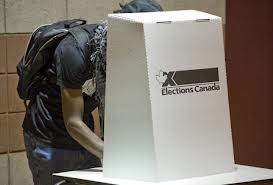
I served as a novice Deputy Returning Officer yesterday and, I have to say, I truly enjoyed it. Some of the highlights were the few new Canadians who were so apparently pleased to be casting a vote. Their pleasure was obvious but so too, quite often, was that of the young people who came as a result of the concerted get-out-the-vote campaign that seemed to me driven largely by the unifying disdain for the now-departing Prime Minister.

election 2
And depart he has, in a fashion quite unexpected by just about everybody. I can’t recall any credible predictions of a majority government for anyone and certainly nothing of the commanding scope given the Liberals under Justin Trudeau. If I’m one of those young people who helped to swell the turnout some 7% above what it was in the last election, I have to be impressed. I’m feeling today that the always seemingly tired notion that your vote really can make a difference has more truth to it than I ever imagined.

election 5
As a returning officer, I saw that satisfaction a lot last night. I made a point of congratulating people, especially those who seemed new to the ballot box, when they dropped their ballot through the slot. I was inspired watching it happen. Such a simple process and yet, at the same time, such a profound exercise of social consensus and civilized action. Expecting perfection of any system invites disappointment so I never fall victim to that. As I’ve probably expressed before, I always used to think that Churchill’s caution about democracy being the worst form of government ever devised by man, except for all the others, was just witty.
I’ve changed my mind on that one. Not unexpectedly, it’s just as imperfect as we are.

But it really is the best we’ve got and I happen to think Canada is, in general, one of the best practitioners of it. As the quote from Macbeth suggests, though, I fear what expectations unfulfilled might do to the new optimism and sense of empowerment that I detect in the aftermath of Trudeau’s resounding win.

election 6
Over my last few blogs, I’ve focused in different ways on my fear of Canada’s drift toward polarization of the American variety, where those who oppose you are vilified as the destroyers of worlds, or at least of the economy, democracy, etc. I’m all for reasoned objection; I just wish it could be reasoned.

Justin Trudeau, to my mind, is to be commended for avoiding, for the most part, the tactic employed with increasing ferocity as the campaign proceeded by the Conservatives and somewhat by the NDP as well. The message, essentially, was that a win by the opponent would be catastrophic in some way. While such a message might tend to play well with the hard-core supporters, the average person, to my mind, is skeptical. You might even say, most people are just too “Canadian” to buy into the catastrophe scenario.

At the same time, those opposing Harper painted him in irredeemable colours that left no room for any allowances being made. It became an all-or-nothing proposition. I hope, with him gone, that that fades and we return to a more balanced assessment of the political choices we face as a country.

election 4
The first challenge for the new government will be to hold the interest and commitment of those who “voted for change”. If things slip into the usual morass of qualifications and “buts” and other factors that tend to lead to disillusionment among those who had high expectations, I fear whatever gains we might have made, especially in terms of engagement among the young, could be short lived.

election 3
But for today, I’m inspired by my experience as a Deputy Returning Officer. I watched a steady stream of people come forward and cast a ballot believing that what they were doing was significant, important even, and, as I’ve always believed, they were right. The trick now, from my perspective, involves keeping that belief alive. Our future (always has, always will) depends on it.

Seeing through the glass darkly

All political movements are like this — we are in the right, everyone else is in the wrong. The people on our own side who disagree with us are heretics, and they start becoming enemies. With it comes an absolute conviction of your own moral superiority. There’s oversimplification in everything, and a terror of flexibility.
– Doris Lessing

As I sit down to write today, news is breaking of a Trans-Pacific Partnership deal being reached. I haven’t heard any of the details yet but, as a general rule, I’m glad to hear that Canada manages to be part of such things. For all that we are, geographically, the second largest country in the world, being dwarfed as we are in all kinds of ways by the inherent power of our southern neighbour, I tend to think it is essential that we align ourselves with those who would create a huge trading block incorporating nations which account for 40% of the world’s GDP.

over 3
What I should find surprising (the fact that I don’t has everything to do with what I believe I understand about election campaigns) is that anyone, even the NDP, would be willing to adopt the protectionist stance that says “no” to anything that, even potentially, affects any element of Canadian industry (the two big ones, in this case, being supply managed dairy and the auto industry) at the risk of being excluded from what would be the largest trade agreement in the history of the world!.

I’m sympathetic to those who might be affected negatively by any deal but to simply walk away from the table because of that is, to my mind, the worst of ideology triumphing over common sense. At the same time, I choose to believe that the positions being taken by the three leaders reflect the ground they have staked out as election day approaches. Stephen Harper presents himself as the protector of a robust Canadian economy that is the result of his decade of responsible economic management (so the line goes). Tom Mulcair insists that any TPP deal is entirely inappropriate, having been conducted in secret to the detriment of Canadians in the middle of an election. Hence, the government has no mandate to conclude a deal of any kind. Justin Trudeau takes the middle road, unwilling to condemn the deal without seeing the details but assuring all concerned that he wouldn’t let anyone ride roughshod over the country.

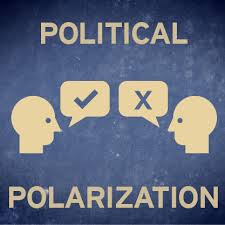
I’ve arrived at a place, personally, where the sheer length of this campaign has finally exhausted me. I don’t know how much more outrage or exaggeration I can take. In my last few blogs, I have circled around the topic of polarization in Canadian politics and this blog, hopefully, will be my last word on the subject for a while. For those who continue to believe that polarization isn’t an increasingly prevalent issue in this election, ask yourself how many careful, rational discussions you’ve had with anyone going into these last two weeks.

over 2 fallacyaday.com

This was brought to me over the weekend when I was talking to someone close to me who has always admitted to having little interest in politics – the details, at least – while, at the same time, wanting to vote and to do so with some confidence that she is doing more than just voting a certain way because a bunch of people tell her she should. I tried to explain to her that it’s tough. She told me how she had been in a room with a bunch of people whose opinions she respects and yet, when she broached the idea that she wasn’t sure how she would vote, no one tried to convince her of anything with careful explanations or reasons. Instead, scorn was heaped upon any choice that wasn’t the preferred of those in the room.

And the thing is, it’s tough to find any source that aims at balance since the media we rely on these days isn’t well-suited to that. That point was brought home to me listening to CBC in the car yesterday. I no longer even remember what the topic was but the speaker claimed that “90% of Canadians . . .” were opposed to something. And that was that. The interviewer didn’t even question the figure in passing. It was simply let slide. No reference to the source, the study, anything to corroborate such a claim. Radio and television are immediate and transitory in ways that written arguments are not and, as a result, they can rarely offer in depth analysis in the moment.

over 6
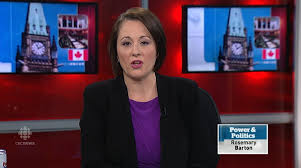
Perhaps the best exception to that rule that I’ve encountered is CBC Newsworld’s “Power and Politics” hosted by Rosemary Barton. If you are looking for media that provides balance and real discussion, I would recommend this. Just be willing to sit for two hours a night. Barton challenges every empty phrase, platitude and gobbledygook non-answer that comes her way and it’s fun to watch, if you are looking for balance. Conservative, Liberal, NDP and any other pundits are equally skewered and/or challenged.

Experience (and ratings, no doubt) tell me that not many people are willing to take the time, five nights a week, to delve into the particulars of any party’s position on issues. As I mentioned earlier, in reference to the TPP, the parties’ positions are, in large measure, a product of the campaign environment. In our current, media-reliant world, the sound-bite rules.

Over 1
So, as election day nears, the rhetoric remains strident and absolute. I suspect, over the last couple of weeks, the volume might increase but little else will change. Depending on who is broadcasting, Harper will be characterized as dictator/destroyer of the nation or sound manager; Trudeau will be the inexperienced, wannabe, name dropper or the defender of the middle class and Canadian values; Mulcair, the angry radical outlier too like Harper (if you’re a Liberal supporter) or Trudeau (if you’re a Conservative supporter) or the face of a new politics, a new age even where Canada’s place in the world can be restored.

over 5
As I’ve been arguing since I started this blog, oversimplification may be appealing but it serves no one well in the long run. It’s too late for this election. But then, maybe “too late” is just par for the course. Perhaps the only difference is that the media’s pervasive lens reveals that penchant for stark oversimplification that has always been there. But even then, you’ll only see it if you’re willing to look.

Drawing the line: the complicated process of real debate

Dislike of another’s opinions and beliefs neither justifies our own nor makes us more certain of them: and to transfer the repugnance to the person himself is a mark of a vulgar mind.
– John Lancaster Spalding

The debate around the niqab that has now become a strategic element of the national campaign (how effective an element is, itself, a matter of considerable debate) provides a classic example, for me, of an issue that lends itself well to the oversimplification that I like to spend time decrying. It manages to engender strong, emotional reactions: it has religious implications; it is a “women’s issue”; it can be framed as a personal freedom issue; it potentially raises questions about the nature of Canadian identity. Chances are I’m overlooking some other way of framing the debate that deserves consideration but I’ll stick to these four.

niqab 1
Certainly freedom of religion and religious practice constitutes one of the commonest defenses of just about any behaviour that might be viewed objectionable or outside the norm (assuming anyone could ever say just exactly what the “norm” is). It would never occur to most people that such things as hairstyle, clothing, assigned days of rest, food choices, modes of address, – all things that have, by some, been claimed as elements of religious conviction – should be challenged. It is only when a claimed religious conviction comes up against competing ideas that are considered of greater and broader significance that objections become significant.

niqab 3
The most obvious example, recently, would be all things surrounding gender identity whether it be gay marriage, gender reassignment surgery, or other related issues. Certain religions have very strongly held views in opposition to such things (note the county clerk in the U.S. who wouldn’t issue marriage licenses to gay couples because it violated her version of Christianity), but the law, in such cases, increasingly sides with those who see such things as natural and inoffensive.

niqab 4
Interestingly, to me, the niqab manages to raise even deeper questions in some ways. When it comes to sexual orientation and gender issues, we are, here in Canada and the U.S., on solidly Western grounds. As a civilization, Western culture has been moving inexorably toward secularism at the expense of religiously based “norms” for quite some time now. Yes, a vocal opposition commonly raises objections as the law moves ahead with gay marriage and other LGBT concerns, but that train has left the station and few could imagine turning back.

The niqab comes from a culture outside of the experience of the average Canadian. While I can remember a time when the young girl who got pregnant disappeared for a few months or maybe was moved altogether in order to “protect” all concerned, I have no frame of reference which allows me to evaluate a woman’s desire to continue to wear the niqab. In the case of the young girl who is pregnant, I am glad we have developed sufficiently as a society to accept such things and seek to aid and to assist in whatever manner might be deemed appropriate. Ostracizing is no longer a choice, thankfully.

niqab 5
But the niqab? For personal, religious reasons a woman asserts that she wants to wear the niqab. Am I correct if I look at the context in which such a practice is common and say that the wearing of the niqab manifests that religion’s subjugation of women? Should I then be able to ban the wearing of that article because it butts up against the higher moral principle of personal freedom and the equality of persons that Canada, as a country, might tend to assert? At the same time, how can I miss the inherent irony of insisting that someone conform to something as proof of their freedom from conformity?

Nevertheless, we do place limitations on immigrant cultural communities whose practices are viewed as “going too far” you might say. When it comes to sharia law, for instance, some have made efforts to allow for sharia law to be applied in parallel to the Canadian Criminal Code, as long as its application was restricted to those who chose to live by those cultural norms. Shouldn’t they have the “right” to do so if they wish? By that logic, honour killings should be allowed as well. As a general rule, the core limit we place on practices we might otherwise defend on the grounds of religious freedom or something else, revolves around how much such a freedom would affect others without their consent.

niqab 6
In the case of the wearing of a niqab at a citizenship ceremony, the even larger issue of Canadian identity is raised, generally along the lines of “why should anyone conceal themselves at the moment when they are joining the Canadian family?” I could write an entire blog on the manifold assumptions and unstated premises in that question but maybe another day.

As I am repeatedly trying to argue, though, it isn’t simply a matter of saying this side is right and that side is wrong: it’s not a black and white issue. Personally, I’m perfectly at ease with the woman who wants to wear a niqab wearing one. Nothing of what I’ve read suggests to me that she has been coerced or pressured into wearing it. She has made a choice and even if I don’t understand the practice personally, no one is forcing me, or anyone I know, to don any particular article of clothing for any particular reason.

niqab 2
At the same time, the angst that this issue raises, especially in Quebec it would seem, deserves analysis. In an earlier blog of mine, I mused on the difficulty we have, as Canadians, with a national identity. The complacency that, to my mind, dominated such concerns for many years is proving insufficient to the challenges of our shrinking, connected world. As I said, if it were up to me, wear a niqab or anything else you deem appropriate at your citizenship ceremony, as long as it’s something you choose and we know who you are beforehand. But that’s me, and nothing is so simple that we can simply ignore those who do not agree just because we think our way is both right and obvious.

Can’t we all just get along?

The political machine triumphs because it is a united minority acting against a divided majority.
-Will Durant

Believe it or not, politics is not my favourite subject to write about. I much prefer education, having spent almost half of my life teaching and many additional years as a student myself. In fact, I’m back to school even now (more on that in another blog maybe). But politics dominates my thinking these days, without question. Part of that can be ascribed to my personal involvement as a city councilor and then, MLA, but I have always been interested.

Comments that have struck me recently as we approach our impending election day concern the particular horror represented by the “Harper government”. As is common in Canada, the government and its leader tend to become inseparable if they prove to have any longevity at all. In Stephen Harper’s case, though, that commingling of identity seems virtually absolute.

In my most recent blog, I reflected on what I see as Canada’s drifting toward the polarization so many decry in the U.S. and the demonization of Harper (please suggest another word if that one seems inaccurate) is just one facet of that. The three major parties go to great lengths to find the “defining moment”, the “one bad thing” that can be used to characterize an opponent. Harper’s latest gaffe is the “old-stock Canadian” comment. Trudeau has been pilloried for his remarks about the “budget balancing itself” and Mulcair’s stumbles over balanced budgets and tax hikes, while lacking that defining phrase, are a constant theme for the other parties’ leaders.

get along 1

Some years ago (15 to be exact), when I was writing a regular column for the Telegraph-Journal (Saint John’s local paper), I reflected on the cynicism that I felt was taking hold in the U.S. surrounding elections. Time, of course, has only made the matter worse for our neighbour. Here is an excerpt:

There have been columns and analyses and polls and forums and I don’t know what, almost beyond numbering, all trying to get to the heart of what Gore and Bush, respectively, stand for. Little wonder: in the potentially ruinous maelstrom of competing lobby groups, special interests and political correctness neither the Vice-President nor the Governor can really dare to have a great deal to say about much of anything lest they offend anyone.

The part that I find most amazing in all of this is that the commentators and other pundits seem to think that this is not only inevitable but is, in fact, simply the “way it is.” Especially when referring to the recently concluded series of presidential debates, analysts nod sagely and remark on how well or poorly candidates have avoided, on this latest occasion, the “one mistake,” the wrong word or glance or position on an issue that might alienate the voting public.

Has it really come to this? Can the one mistake be so thoroughly devastating to a candidate’s chances? More importantly, what does this brand of analysis say about American’s expectations of their politicians? Commentators seem more interested in whether or not the particular candidate’s mask has been kept in place than they are in any substantial contribution to public debate made (or not made) in the course of the evening. Americans see validated repeatedly the notion that character is constructed. The challenge is to try and see the man behind the mask in order to determine if he even remotely resembles the persona that has been created for him.

I chose to revisit this old column of mine in order to illustrate, hopefully, in another way, our slide toward extremism. Contrary to what some might think, I am not here trying to support any particular party or view. As a Canadian, I am concerned that we are, to my mind, drifting closer and closer to the American reality where opposing political views can barely exist in the same room. While we may not be there quite yet, my recent experience suggests we are not that far away.

get along 2

To put it another way, I encourage one and all to vote for the candidate or party you find most appealing. But, as you do so, please realize that you are voting for a construct. As the incumbent, Stephen Harper garners the most attention for the things he says that confirm either his flaws or his strengths (depending on your view of the man and his party). As the challengers, both Mulcair and Trudeau have far less baggage to account for but they are as much constructed by handlers as Harper.

As things stand now, the outcome on Oct. 19 seems most likely to be a three-way tie. Should that be the case, what will that teach us about those who would lead our country? Will anyone be willing to compromise? Is minority government possible when parties spend their time demonizing and vilifying opponents? Another reflection from 15 years ago: “Elections allow politicians the opportunity to convince us that beneath their desire to maintain power there is a legitimate dedication to public service.” Because of my personal experience, I know that those who pursue political office commonly do so with the intention of doing good. A minority situation just might offer the voters of Canada a chance to be reminded of that. It might even remind the politicians themselves.

Drifting toward the black and white: polarization in Canadian politics

Everything we hear is an opinion, not a fact. Everything we see is a perspective, not the truth
– Marcus Aurelius

Some years ago I was dating a woman from the States and, while George Bush was president (his first term), we visited some of her relatives in Minnesota. I’ve always been interested in politics, even before I became involved personally, so I was happy to engage when our conversation took a bit of a political turn. I’m not sure how it came up but the contention one of the relatives raised that has stuck with me is this: all Canadians (or anyone from anywhere for that matter) want to be Americans. According to this gentleman’s view, the rest of the world is consumed with envy. Given the chance, anyone would abandon the land of his/her birth in favour of a place in the good ol’ U.S. of A.

polar 6

Absurd you say? Certainly I thought that but it didn’t take me long to realize that I would be wasting my time if I tried to develop any kind of argument to the contrary. For this guy, the world’s desire to be American was a matter of faith. If I didn’t think his observation applied to me, I was simply deluding myself. Somewhere deep inside, there was an inner American seeking the light.

This encounter was just one highlight of a time where I came to realize in a profound way how difficult it was becoming to have a political discussion in the U.S. Considering that this couldn’t have been any more than 13 or 14 years ago, it’s hard for me to believe that the radical polarization of politics in the U.S. is so young. And yet, as I say, this was just part of my developing understanding at the time that politics was not something that you wanted to bring up unless you were sure of the company you were keeping.

polar 1

Flip forward to 2015. A general dismay is expressed over the early success of Donald Trump’s candidacy in the Republican presidential primary campaign. The pundits roll out any number of explanations for his popularity and, in general, dismiss his long-term prospects. While they may be right, I can’t help thinking he would appeal to my then-girlfriend’s relative. Trump’s xenophobic brand of American triumphalism is rooted in the idea that everyone is jealous of America and, since not everyone can BE American, those wannabes will spend their time, spitefully, trying to undermine the country.

To a rational person, Trump’s viewpoint seems absurd (I hope!) but, at the same time, I can’t help thinking it is a logical outcome for the divisive and extreme polarization that has become the hallmark of so much of politics in the United States. I’ve mentioned in this blog before that one of my guilty pleasures when I’m traveling in the States is listening to talk radio of the Rush Limbaugh variety. I am endlessly fascinated by how bizarrely extreme the rhetoric of the Limbaugh crowd really is. They all despise Barack Obama but it is the way in which they despise him that intrigues me. It isn’t simply that his policies are bad or his leadership ineffective; he is “destroying” America, “tearing up” the constitution, etc. Trump’s and other’s buying into the birther nonsense regarding Obama’s origins was just one especially laughable (disturbingly so) manifestation of trends that have been building for some time. As Canadians, (correct me if I’m wrong), we tend to look askance at the politics of our southern neighbor and are thankful that we aren’t like that.

polar 3 Note the stylized flag

And that is the point of my musings today. How different are we? On Saturday I visited the Fredericton market and did my best to avoid the “Anyone but Harper” table where proponents are trying to mobilize an anti-Harper vote to ensure that vote splitting doesn’t allow a Conservative candidate to ride the middle to victory. On Sunday, I ran into a friend of mine campaigning for the NDP who gave me a hug while saying something about hugging a Conservative (I pointed out I am NOT a Conservative but a Progressive Conservative, a distinction that is quite readily dismissed by friends of mine who are in the anti-Harper camp). I know for a fact that conversations I might have with any number of friends come to a screeching halt as soon as I indicate that I am not ready to participate in the wholesale condemnation of Harper and the federal Conservative Party that has come to be taken as a given by those who are supporting “anyone but”.

polar 2

When I started writing this blog (if you were wondering where I’ve been, I took the summer off), I tried to make clear that my motivation was to defeat the oversimplification that I believe is endemic in politics, education and virtually every facet of common public discourse. As Canadians, we like to believe that we are distinctly different from Americans in any number of ways. Sadly, when it comes to politics, we are drifting more and more toward the American model.

And let’s be clear: the federal Conservative party has had a large role to play in creating that “us vs them” approach, an approach that demands the demonization of opponents at the expense of reasoned policy debate. At the same time, those who would otherwise oppose such oversimplification are drawn into the fray. People who are generally thoughtful and open to nuanced consideration line up to sign the “anyone but Harper” petition or pledge, as though that represents a reasonable (and reasoned) choice. Demonization through ads, pronouncements, social media and any other means becomes the order of the day for ALL parties, whether constituted political parties or specific groups pursuing an agenda.
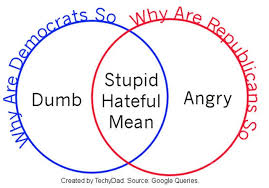
It makes me sad. As a Canadian, I have long felt that we have managed to avoid many of the worst excesses of our southern neighbours. I contend that even as those who support the “anyone but Harper” movement claim that they are acting in the best interests of Canadian democracy, they are, in fact, ensuring that we will continue our slide into the starkly oversimplified polarization that we so readily condemn when we look at the U.S.A. And that, more than anything, would be a dreadful stain on the very democracy we all claim that we hope to protect.

The Choices We Make

___________ is rich in radicalism, and anyone who says that our society has drifted into fatalism and apathy should get out more.
– Geoff Mulgan

voter 1
As we approach the onset of federal electioneering (“approach?!?” you might ask, in light of the onslaught of advertising we’ve been seeing for the last few months, if not longer), I’ve found myself explaining my views of certain realities related to politics to a friend of mine. To my mind, she is an excellent representative of a large portion of the electorate: smart, informed in a general way (reads the local paper, watches the news, and picks up information from other sources), and likely to vote for any one of the three major parties. In short, she belongs to that demographic coveted by all parties, the undecided voter.
voter 4
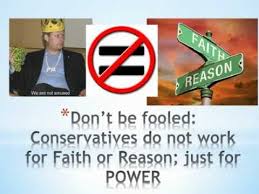
It’s easy to understand her dilemma. As campaigns develop in the run-up to an actual election, the sales jobs that each of the parties mount are unified in their simplicity. If you are the Conservatives, most of your time is taken with drilling the somewhat clever play on “Justin” Trudeau’s name – “Just Not Ready” – into the national consciousness. To all those who complain that largely negative advertising is objectionable and does not work, I would agree with the former but generally object to the latter claim. Even if you find it distasteful, there is a reason why parties return repeatedly to a negative approach: it has been shown to work. Plant doubt in the minds of voters and that doubt can grow. When, like my friend, you don’t spend a great deal of time thinking about politics and elections, the things that stand out in memory become very important. It is often said that we shouldn’t be overly influenced by first impressions. That might be a fine ideal but, in practice, I’m not sure how true it is. If you can get your message, however simple, planted in people’s brains, it has potential to grow. With so many distractions available in modern life, making anything particularly memorable in an area where people seem generally indifferent has to be considered a victory of sorts.

voter 2
For the Liberals, things are ostensibly a little easier. I can’t say how things are anywhere else in the country, but here in Saint John, New Brunswick, that “stuck in memory” phenomena has taken hold for many people. What has stuck in people’s memory is the name Stephen Harper and there seems to be very little nuance in the way in which many view that name and what he is thought to represent. I can’t think of another politician whose name awakens such visceral loathing. I realize that is a harsh assessment but I’ve encountered it on many occasions, usually in the company of such words as “dictator”, “control freak”, “bastard” – you get the picture. In a country so long dominated by two major parties, you might think the Liberals would be able to make it a cakewalk. The “we’re not him/them” rule is one that we should all be familiar with. Popular wisdom in this country says that governments aren’t so much elected as unelected. Capitalize on Stephen Harper’s unpopularity among many and the road to victory for Canada’s once “natural governing party” would seem to be assured. Or that’s how it used to be.

voter 3
But then came the last federal election and the decimation of the Liberals accompanied by the rise of the NDP to Official Opposition status. I was among the many who would have thought of the NDP surge as a flash in the pan, an anomaly in the historical power swap of Liberal and Conservative governments. But then Rachel Notley cruised to victory in Alberta and, all of a sudden, all bets were off. This has meant that the NDP has had to think long and hard about how they might sell themselves to a hesitant electorate. Speaking from the East Coast, the historical general reluctance has been largely the result of, in my opinion, fear that the NDP would be too radical, that an NDP government would upend the generally centrist record of previous governments in favour of a socialist approach that would be inimical to business, largely answerable to unions and without constraint in all matters of fiscal accountability. So it is that NDP ads to date have focused on a friendly, ordinary guy, very much “one of us” you might say. Thomas Mulcair, if people know of him at all, has, to date, been little more than a name. As the NDP suddenly finds itself in the lead in most polls, getting to “know” Tom Mulcair becomes extraordinarily important to all concerned. Whoever manages to win the “first impression” contest – and it has to be a first impression that can withstand the inevitable counters from opponents – will have gone a long way toward winning the day. Since the Conservatives and Liberals seem largely content to rail at each other (with some exceptions beginning to appear), early indications would be that the NDP might win that particular battle.

voter 5
In a very real sense, little of what the next few months bring by way of campaigning will help my friend make up her mind. My take on the entire thing is determined by my faith in our system, in her, and in all like her. Repeatedly we hear complaints about any number of elements deemed wrong or imperfect in Canada’s model. While acknowledging that it could be improved, I will continue to defend its effectiveness. Ours is a country that knows a peace and security increasingly rare in the world, it can seem. Whatever the result in the fall, I choose to believe we will continue to develop peacefully, securely and without fear of military coups, insurrections or other systemic upheavals. And THAT, more than anything, is what I’m always voting for. We may not be perfect, but we’re pretty damn good.