There (NYC) and back again

Perhaps home is not a place but simply an irrevocable condition.
― James Baldwin, Giovanni’s Room

New York City has long been a favourite destination of mine. Back in 1976, I visited for the first time with my brother as part of a summer adventure that saw us travel coast to coast and back again. As an 18 year old experiencing the enormity of New York for the first time, I was understandably awestruck. Mind you, it was a far different city then from what it has become.

vintage 42
42nd Street was, shall we say, “seedy” to be kind. While Broadway was undoubtedly a huge attraction, the high-minded, artful Big Apple sat side-by-side with peep shows aplenty and street attractions that I haven’t seen since that first visit, and I’ve been back many times. And for all the times that I’ve been there, only on that first visit was I ever afraid. While walking along 7th Avenue near Times Square, I managed to attract the attention of some nefarious types who made me uncomfortable even if nothing detrimental to my health actually happened.

Still, once New York gets in your blood, it’s pretty hard to stay away. On my most recent visit, I was explaining to my companion on the journey that no city I’ve seen is built on the scale of New York. I’ve been to cities that have larger populations and far crazier traffic (Bangkok in particular comes to mind – consider being in a taxicab that stalls in the middle of some eight to ten lanes to traffic and just won’t start – been there, done that). But New York’s enormity is unique, a fact that was explained for me, in part, by a statistic I encountered in a publication that came with my subscription to The Economist magazine, “Pocket World in Figures.”

NYC 2015
Among the minutiae describing population and various statistics regarding age, demographics, median income and the like was a list of cities with the most skyscrapers. While I can’t say for sure what the rule is for designating buildings as such, two things struck me: Toronto came second with 1,993; New York was first with 5,888! Toronto’s position as number two was surprising but the distance between first and second place was what caused my jaw to drop. No wonder New York immediately impresses you with its size. So much of it is just so BIG!

IMG_8595
On this latest trip, by virtue of where we were staying (New Jersey), our day in the city always began at the World Trade Centre. While the site remains a work in progress, the centerpiece of the redevelopment, the new building – One World Trade Centre – is largely complete. While nothing could ever replace the twin towers, the new building is a worthy successor. As luck would have it, we were able to watch a documentary on the construction of the building not long after we returned to Saint John. Knowing the details of the construction simply enhanced the wonder the sight of the structure had engendered in me. Enshrouded in glass, it is a huge needle that draws your eye anytime it appears in your field of vision.

IMG_8599
Otherwise, the city remained its usual, frantic self. Over the course of our five days there, we checked out Central Park just to be reminded that trees do bloom and that Saint John’s turn will come, even if it is a month or so behind. The Staten Island Ferry, with its great views of the Statue of Liberty, Ellis Island, Manhattan and New York Harbor continues to be the best ticket for the price of just about anywhere. That being said, if you haven’t done the cycle of New Brunswick’s ferries on a beautiful summer day, you need to make a plan and make sure you do.

IMG_8610
A Yankees-Mets game, Broadway shows, a visit to Brooklyn, good food galore, the sights and shopping: five days well-spent, I say. Towards the end of our time we managed to encounter a couple of protests, louder versions of the overall impression I always have of New York: this is a place where “things are happening”. I know the same can be said of any of the world’s major cities but something about its physical presence makes everything in New York conform to its image as the BIG Apple. I always feel that I’m somehow closer to the pulse of the world when I visit. And I enjoy that.

At the same time, when the day came that it was time to leave, it didn’t take me long to remember why New York is always a nice place to visit but not somewhere that I would necessarily want to live for a long time. As you leave the city and head northward you eventually get beyond the traffic that stays with you almost as far as Augusta. Once past Maine’s capital, though, things begin to revert to the pace that we think of as “Maritime” and, quite frankly, I breathe a sigh of relief.

IMG_3142
No matter where I go, it’s always the same it seems, especially if I’m driving back from the U.S. When I come over the rise on Highway #1 where the city is laid before you, it always looks particularly beautiful to me. Which, I suppose, goes a long way toward proving the old adage, at least for me, that “there’s no place like home.” In my case, that’s Saint John – always was, always will be.

Two different inclusions

Under popular culture’s obsession with a naive inclusion, everything is O.K.
– Stanley Crouch

The Supreme Court’s recent decision that prayer in public institutions – specifically at a council meeting in Saguenay, Quebec – shouldn’t be allowed provides an interesting entry point for a discussion of inclusion, a hot topic in New Brunswick, especially as it relates to public schools. At first glance, someone might be moved to question how the two could possibly relate to one another. Prayer at a council meeting segues into a discussion of inclusion in schools? Understandably, it seems like a stretch to want to talk about the two things in the same breath.

inclusion 4
A story on the Supreme Court’s decision piqued my interest when it used the word “inclusion” in reference to factors which determined the justices’ conclusions. Needless to say, inclusion here means something quite different from inclusion when employed in an educational context. The fact that the same word can be used in such radically different situations points to the problematic quality of such terms when they are used as if their meaning is crystal clear. In fact, as the radically different contexts suggest, definitions and their implications can serve as profound examples of the commonly expressed truth that “the devil is in the details”.

When it comes to the issue of prayer, the view of the Supreme Court seems fairly straightforward to me. While the article notes that our constitution, unlike that of the U.S.A., makes no specific mention of the separation of church and state, the principle of ensuring that PUBLIC institutions are inclusive suggests that favouring a religious stance over an expressed irreligious or atheistic one, has the potential to make someone in the latter category feel left out or uncomfortable. And the solution to this dilemma (let’s leave any discussion of how much of a dilemma really exists to another day) is so simple: before this decision, identifiably Christian prayers were said before council meetings; from this point forward, they won’t be said. Case closed.

inclusion 3
When the word “inclusion” is used in reference to education, on the other hand, it just isn’t that simple. Inclusion has become both a stated policy and a guiding principle in education in the New Brunswick school system. To speak publicly, in a negative way, about the policy is anathema for teachers. If anyone is fool enough to do so, an abrupt rebuke is likely to follow. Having worked in the system at a time when current inclusion policies were being developed but had not been implemented to the degree to which they are now, I have limited experience with the impact such policies have had to the present moment. Based upon discussions I’ve had with former colleagues who are working amidst the current inclusive environment, however, it sounds as though the challenges are many, to put it mildly.

inclusion 2
Just so no one reading this thinks I am someone deserving of one of those afore-mentioned rebukes, I am not writing to voice my opposition to inclusion in schools. As Canadians, we have many things of which we are rightly proud and I would like to think that our capacity for welcoming diversity within our communities is among the most highly regarded. Creating an inclusive society is on a par with any other element which might come to mind when envisioning the best Canada we can imagine.

But, in schools, inclusion isn’t on a par with the Supreme Court’s decision. In the latter case, a judgement is rendered and from that day forth, no prayers in council chambers ensures that one and all are “included” in such sessions. Unfortunately, in our rush to achieve inclusive schools, we employ a similarly narrow view. The prohibition that governs commentary on inclusion prevents anything resembling assessment of its effectiveness from occurring.

When I’ve tried to bring this subject up with people who are proponents of current practice, I am commonly confronted with the assertion: “Inclusion is working”. Considering our penchant for researching everything in education before we allow that it even exists, I am surprised on the one hand that such views are offered without qualification. On the other hand, the defense of inclusion as a principle has become ideological; hence, no time can be allowed for any opinion that questions the central article of faith, namely, that inclusion of all students in common classrooms without consideration for differences of any kind is an absolute good.

inclusion 1
In the case of a classroom, though, what does it mean to say that “inclusion is working”? Do we assemble students in classrooms with nothing more than the express purpose of gathering them together without consideration being given to anything beyond their age and grade level (assuming grade levels exist)? Most people, I’m guessing, would think that what is being learned and the environment in which learning is, hopefully, going to take place would be at least as important.

Perhaps the core of the problem with inclusion in reality – as opposed to inclusion in theory – lies with the either/or mentality that is so prevalent in this age of oversimplification. I’ve been privy to conversations where someone tries to raise a concern regarding a personal experience with inclusive classrooms only to be shut down before the concern can be adequately outlined. This is a siege mentality that imagines the issue exclusively in the framework of “you’re either with me or against me”.

Surely there is room for some honest examination of the impact inclusion is having on classrooms. Good teachers speak of more time being spent in raw classroom management than is spent on actual instruction. And even as I say that, I know that I could easily be assailed by someone who would question my formulation of a classroom as a place where instruction occurs: “we facilitate; we don’t instruct”, or something along those lines.

Even that, though, helps support my point. Classrooms are dynamic places and inclusion is just one element of that dynamic, albeit an important one. Focusing on just one element to the exclusion of all others costs all concerned. If improving schools is our highest aspiration, we need to recognize the true complexity of the inclusion model. If our PROOF that “inclusion is working” is simply that everyone is now in similar class groupings, we end up serving no one well.

Criticizing critical thinking

Critical thinking is thinking about your thinking while you’re thinking in order to make your thinking better.
― Richard W. Paul

I’m struck today by the irony implicit in the conception of this blog of mine. “Unabsolutedotcom” exists as a result of my frustration with what I see as persistent oversimplification in just about everything that touches upon our lives, but especially as it manifests itself in public discourse. And yet I try – in some 900-1000 words usually – to unravel that same complexity. While that might strike some as more than enough to dedicate to such a project at one time, I frequently feel constrained.

problem 3
Getting lost amidst the details (the devil’s in them, as the saying goes) constantly threatens clarity, but then I shouldn’t be surprised by that either. No matter the story in the media (I choose that as a reference point since so much of our grasp of current affairs is controlled by what we read, see or hear through print, television and radio), seldom do we learn much beyond the statement, the proclamation or the conclusion.

To be fair, in many instances, we really don’t need much more. If our concerns are limited to a bare understanding of events or facts without qualification, then our conventional media sources can be commended for doing a fine job. As I’ve noted in previous blogs, never have we had so much information so easily accessed (maybe “acknowledged” is a better way to put it since I’m at the end of a very long list when it comes to noting that). I’ve finally arrived at a point in my own life where I seldom sit around wondering how I will find an answer to something only to have it occur to me that the answer is literally an entry on my smartphone away. “Automatic” is the best word to describe my readiness to turn to the nearest electronic device whenever I am looking for simple information.

problem 2
What about reflection and analysis, though? A common theme these days (especially in education, my favourite topic) concerns the need for critical thinking in all kinds of situations. This information age of ours, however, creates a habit of mind that discourages such thinking. For that matter, I’m not even sure that we really mean “critical thinking”, per se, at least not my understanding of the term. “Problem-solving” better describes what most are looking for, which is a VERSION of critical thinking that is well-suited to an age of technological innovation.

Lo and behold, the entire notion of criticism falls victim to over-simplification and serves to further illustrate the difficulties inherent in even trying to address the issue. Instead of critical thinking being a vehicle whereby we illuminate the nature of a problem, where subtleties and nuance are revealed, or where questions are developed, refined or discovered, we pursue it solely as a means to a particular end.

Once again, my personal pursuit – of the more nuanced version of critical thinking – demands that I qualify the previous paragraph. The pursuit of a particular goal through critical thinking isn’t a bad thing. Of course it isn’t! But neither should that be regarded as the ONLY valuable use to which it might be put. The best critical thinking allows us to go wherever the mind might lead us, to confront the uncomfortable, to consider things in ways that might have eluded us and yes, to find solutions to problems that may have been, themselves, unclear to begin with. Allowing for critical thinking of the best kind, you might say, is the defining element of a free society.

problem 1
So why am I ranting about this today, you might ask? No surprise to anyone who has been reading this blog (or listening to my ponderings throughout the years), a story regarding education got me on a tear. The president of the New Brunswick Teachers’ Association was offering his opinion that a proposed cut to the budget of the Department of Education would decimate education in the province. Of particular interest to me as I read the article were his references to two studies conducted over the last ten years, both of which deal with the subject of inclusion in schools. To be clear, I do not want to discuss inclusion itself at the moment. If you are not even sure what I mean when I say “inclusion”, that’s okay, too. I will come back to it on another day.

All of this is happening in the context of the provincial government asking departments to suggest what cuts of between 5 and 10 percent in their budgets would look like. I don’t even want to spend time considering how problematic such an exercise is in and of itself. Considering the inherent complexity of anything as massive and varied as our public schools, such calculations can’t help but seem like a fool’s errand to me but that too I’ll save for another day perhaps.

No, what bothered me most was how the article suggests that the NBTA and its leadership fail to even question the assumptions that drive the system. Haven’t they heard enough to know that the current system is already in big trouble?!? If the article is reporting accurately and thoroughly, the lone response from the representatives of professional educators is to challenge any planned cutbacks exclusively on the grounds that resources currently are insufficient to ensure that policy is implemented as outlined.

problem 4
I’m not surprised, though. It’s easier to spend all of your critical thinking energy on trying to solve the math problem of the budget than it is to look closely and CRITICALLY at WHY schools are not improving even as the budgets increase and teacher-student ratios are the best they have ever been. The best critical thinking tends to make us uncomfortable and few nowadays, especially in the public arena, have the stomach for that.

Is knowing how enough?

Our technological powers increase, but the side effects and potential hazards also escalate.
– Alvin Toffler

tech change 5
I was struck by a comment a friend of mine made over the weekend. She suggested that when she read my blogs she could see how they originated based upon certain things she had heard me say in the days prior to their composition. Maybe I had read an article, or seen something on the news, or simply shared a reflection on something I had been thinking about. The noteworthy thing, for me, was the recognition of cause and effect, that the thing I ultimately produced had origins that, to her mind, could be detected and, in fact, traced.

Now granted, this was hardly a scientific accounting of cause and effect but it did get me thinking about the entire subject of cause and effect, a concept that has occupied my imagination for some time and that is one of the ongoing concerns at the core of this blog. As it turns out, my being reminded of this in such an immediate and personal way was valuable as I began to consider what I might end up writing about today.

I was already primed for something that would incorporate this theme when an article I saw this morning proved to be the final impetus. The article summarized the findings of a study undertaken at UNB in Fredericton that investigated the link between teens, texting and their propensity to be sexually active. While the conclusions were qualified in a variety of ways, the central assertion was that a link had been established between the amount of texting teens did and how likely they were to become sexually active. The study acknowledged that the closeness teens felt to parents and other factors should be considered as well but the bottom line was that those young people who texted with the greatest frequency were more likely to be sexually active than those who texted less.

tech change 3
The authors of the study were very careful, as I say, to couch their conclusions in a number of qualifications but that isn’t what made the article significant to me per se. Rather, I was struck by the very fact that such a study existed at all. I’m at a loss to remember when I first noticed just how ubiquitous texting had become among those removed from me by at least a generation but I have to think that its prevalence has grown by leaps and bounds over the last while. I was sending the occasional text myself as long ago as probably 5 or 6 years but I don’t remember things then being quite as they are now.

Now – and this is purely anecdotal – it seems that being buried in your smartphone just about everywhere is commonplace. Walking down the street, sitting on a bus, in a restaurant: you name the place. Virtually everywhere you go, you will see someone engaged with a handheld device. When the population gathered in a room is largely teenaged, it is far from uncommon to see virtually everyone exploring the screen in front of them at the expense of conversation or other forms of social interaction. That being said, this behavior is certainly not restricted to teens. The same friend who suggested she could trace the origins of my blogs has commented more than once on my tendency to be drawn into the world of my smartphone at the expense of more social behaviours.

tech change 2
If you are thinking by now that I am building toward some kind of critical rant against texting, handhelds, smartphones or some other device or technology associated with the same, I assure you that I am not. I readily acknowledge the convenience – the pleasure even – that can come from such things. As with anything new, it can lead to a great many novel ways to entertain, to engage, to who knows what?

And that last question DOES lead me to my point. The smartphone and texting are manifestations of a much larger transformation. Technology – particularly technological innovation – proceeds at such a pace these days that it is, quite literally, impossible to keep up, at least when it comes to evaluating the impact of something. The UNB study I referenced earlier looks at a very specific issue within a targeted segment of the population and offers conclusions that are clearly to be regarded as tentative and in need of qualification. In some earlier time, we might have waited expectantly for the next study to be carried out and for results to be published, say, two years from now, results which might further deepen our understanding of this phenomenon or dismiss it altogether. Fat chance.

tech change 4
Two years from now, who knows where we will be as far as phones go. I am no fan of Siri (the voice on Apple devices) but I have a friend who never types a message. He dictates it and makes corrections to the text if it is absolutely necessary. Will we even need to carry a phone in two years? If you think that seems far-fetched, how many of you really believed we would ever approach a time where serious consideration would be given to allowing cars on highways that would drive themselves?

When I look to see how I arrive at a topic for a blog, it’s easy. Maybe I fail to account for the specifics in some way but I’m fairly confident that composition (even inspiration), however mysterious it might seem, can be traced to its source, even if the source itself might seem obscure at times. Where advancing technology is concerned, on the other hand, how do we evaluate its impact when the innovation of the moment is rapidly forgotten as the next great advance captures our imagination?

tech change 1
We’ve all seen the movies or read the books where technological advance without some kind of oversight or conscience leads to the end of the world or some brand of catastrophe. Hyperbole? Okay, but the pace at which things advance technologically these days does concern me. Changes of any kind bring consequences. At the very least, it is always nice to be able to consider from some distance just what impact such changes have. I’m not sure we’re well-equipped for a world where change comes and is replaced by yet another change before we’ve even quite grasped the nature of the first. And to emphasize the point one more time, in the time it takes for us to consider THAT notion, chances are the world has moved on yet again.

There ain’t no rabbit in that hat

The complexity of things – the things within things – just seems to be endless. I mean nothing is easy, nothing is simple.
– Alice Munro

What do you THINK? Have you been asked that lately? Chances are you have been, whether through a telemarketer who fooled you by having a blocked number causing you to answer the phone anyway, or simply in conversation with friends. Our thinking on just about any topic is the very definition of conversation, after all. Who is going to make the playoffs? What you think of the government and its latest policies? Events in your neighbourhood? Family matters? Life? The universe? Everything? If you’ve ever tried to define what makes human beings different from the rest of the animals, some reference undoubtedly was made to our ability to reason and to contemplate our existence.

complexity 5
That being said, I can’t help thinking (there I go) we are living in a time when the ability to think carefully and constructively has become increasingly difficult. Okay, that isn’t quite right. As individuals, we have as much time for thinking as we might choose to provide for ourselves. If I want to sit at home with quiet music playing (a concentration aid for many), I can take time to ponder to my heart’s content. Maybe I’ll even pause now and then to take a note or two or even write something that comes to mind at greater length. No, my concern is not so much for the individual’s opportunity to consider whatever comes to mind. I do, however, wonder if an “exchange of ideas” is possible, or even likely, in the multitude of public forums that have become increasingly in demand.

For the sake of this blog, I am using “public forum” in a very restricted sense. Advertised as opportunities for members of the public to get together and voice their concerns regarding whatever issue has made the forum necessary, I seriously question their efficacy. Maybe, when the notion was first devised, such events actually led to a meaningful exchange of ideas and/or positions. More frequently, these days, if specific interest groups haven’t organized such gatherings, those same groups are liable to appear with a clear intention of hijacking the meeting for the furthering of its already decided and unshakeable stance.

complexity 2
These forums can go by different names. One that I attended a few years back was termed a “public information session”. Organized by proponents of a project that involved power lines that would skirt a residential neighbourhood, those with concerns came well prepared. The session was organized as follows: a representative of those with questions would provide a presentation, the proponent would do the same, and a Q &A would follow. Sounds good.

In my perfect world, the session might go like this: those concerned would outline any objections, questions, clarifications they might have/need; the proponent would seek to answer and to explain and maybe fill in any perceived gaps; a discussion/exchange would conclude the evening and all concerned would leave feeling they had a better understanding of the issues. As a follow-up, lines of communication would remain open and, hopefully, all concerned would feel heard even if the final result was not entirely to their liking.

complexity 4
In fact, it was more like this: the concerned side gave a very well conceived presentation, one that outlined their fears and suggested clearly why they were opposed to the project. The two most prevalent causes for their resistance were issues regarding property values (fears such values would decline) and health (studies showing that persistent exposure to high voltage lines can be harmful). They concluded that the answer to their concerns, as outlined, was to bury the lines.

An engineer for the project then came forward and described the plan and pointed out a couple of things: since the lines would be running adjacent to an already existing (and fairly heavily trafficked) rail line, any impact on property values would be negligible. He further pointed out that the lines would be so high in the air that they wouldn’t obstruct anyone’s view. Significantly, he described the lines themselves as at the lowest end of high powered lines. And the real kicker: burying the lines would actually bring the lines closer to people and, since being covered in earth in no way impeded whatever emissions accompany such things, any potential health hazard would be increased, not decreased. Surely that would be the game-changer.

complexity 3
As a disinterested observer, I might have thought that was the end of it. However, when all was said and done – a few questions and clarifications followed the presentations – one voice was raised above the others and proclaimed: “Bury the lines!!!” whereupon the assembly erupted in a raucous round of cheering and clapping. And I’m thinking: what about health concerns?!?

Am I making a mountain out of a molehill? I don’t think so. I use this event as a simple example of a much larger problem: we have little time these days for real debate of complex issues. Whether in letters to the editor, at public forums or in the media, little time is allowed for careful analysis and consideration. Virtually everyone arrives with minds made up and complains, after the fact, that they didn’t feel anyone really listened to them. Translated, that means those on the other side didn’t agree with what your side had to say.

complexity 1
We hear frequently about polarization of opinions and in politics, but I don’t think polarization is a cause of anything. Instead, I would argue it is a symptom of a modern world overwhelmed by information. When so much can seem so confusing and so complex, the simple answer, the slogan, the catchphrase, appeals to us. Even though the evidence is all around us that increasing complexity is only going to grow, we long for simplicity, even if it is illusory. Which brings to mind another old adage: be careful what you wish for.

The road to hell

“God save us from people who mean well.”
― Vikram Seth, A Suitable Boy

When I hear the outcry over cuts to funding for education – whether it be freezes to university grants, the elimination of teaching positions or other measures – my reaction is predictable: you’re missing the point!! As if the quality of education can be assessed through some one-to-one correspondence between allotted budgets and results. Even though I am not surprised, I can’t help myself. Again and again, in any number of arenas, I hear quality reduced to a mere accounting line.

good intentions 4
Don’t get me wrong: I am not suggesting that budget cuts and funding freezes are incidental and without consequence. A harsh reality sometimes overlooked by the more starry-eyed among us is that virtually everything has a cost attached. Even the most charitable of undertakings (think foodbanks and homeless shelters) comes with a price tag. When drives are mounted to collect canned goods, for example, such commodities do not emerge out of the ether. That can of baked beans was manufactured somewhere and is the end product of a long line of supply beginning with someone who cultivated the beans (maybe themselves purchased from a supplier) and sold them to someone else and so on. The point being, simply, that all along the way someone is being paid.

When applied to simple commodities of any kind, the correspondence between product and cost is fairly straightforward, even when the context in which it is applied might seem obscure. If you’ve ever wondered how lawyers can justify charging hundreds of dollars an hour for services or, even more, how an executive can “earn” millions of dollars in bonuses, you can still say that the connection between service and compensation is clear, even if you might not regard the compensation itself as reasonable.

good intentions 1
Similarly, even the most expensive of objects leaves no room for doubt: if you want that Rolex watch, it will cost you $10,000. You think it is overpriced? So don’t buy it. The retailer knows from experience that someone out there is willing to pay. All the way back to the time when our earliest ancestors traded a rock for a stick (or some other equally primitive artifact), the value of a product has been determined, at its most basic level, by what someone is willing to pay, whether that payment is for an object, for expertise or for a service. And again, make no mistake, no matter how generous something might seem, someone, somewhere, is being presented with a bill. If such were not the case, fundraising drives for relief of all kinds would become obsolete. Generosity, however much we might hope to conceal the reality, comes at a cost.

By now, someone might be ready to accuse me of cynicism. That, too, to my mind, would be indicative of an unfortunate modern trend. In this era of political correctness, voices that are raised to point out certain realities are seldom welcome. As I’ve argued in earlier blogs, few areas are more prone to this than education. Most recently, I tried to point out that the elephant in the room where literacy rates are concerned is the fact that people who are essentially illiterate still manage to graduate from high school and obtain a diploma. Considerable angst might be felt over illiteracy itself but no one seems to have the fortitude to ask a simple question: what is wrong with the system that allows such a thing to happen with such frequency?

good intentions 3
Criticism of spending cuts in education (and the randomness of the cuts themselves, to a certain extent) is further evidence of the superficiality with which such things are handled. A luminary no less than the president of the New Brunswick Teachers’ Association contends, without qualification, that a reduction in the number of teachers employed in the system means students will be affected negatively. By implication, an increase in the number of teachers in the system should equally mean that student performance (almost exclusively measured by standardized tests of some kind) improves. Considering that over the last thirty years the student population has decreased substantially while the teacher to student ratio has done nothing but improve, logic dictates that student results should be doing nothing but improving. And, as we all know, that hasn’t been the case.

I raise this issue not because I undervalue teachers or, equally, not because I believe funding for education somehow deserves to be less than it is. Focusing exclusively on such “manageable” elements, however, prevents us from confronting the far more complex problems confronted WITHIN the system which this money is funding. Our data-driven world longs for the obvious and the educational system has succumbed to that illusory longing. Literacy or numeracy scores are down? Hire more teachers and increase funding. If we can afford it, maybe we can throw in a few more external tests along the way.

Businesses, lawyers and other professionals, retail salesmen lend themselves well to the measurement of output. The business makes a profit, the lawyer wins the case, the real estate agent sells a house. Even doctors, regardless of the complexity of the professional task, have a clear goal in mind, namely, the health of the patient.

good intentions 2
But education just isn’t that straightforward. If expenditure and achievement had a direct correlation, things would be so much easier. Please, keep as many teachers as we can afford and fund the system to the max. But don’t confuse funding with achievement. Nothing will truly improve until all parties admit openly that something is seriously wrong with the system as it is. Most regrettably, the crisis we see today is largely the result of good intentions gone wrong. But then, we all know where they lead, don’t we?

Beware the ripple of inattention

O divine art of subtlety and secrecy! Through you we learn to be invisible, through you inaudible and hence we can hold the enemy’s fate in our hands.
– Sun Tzu

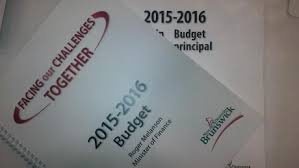
Following the release of the first budget by New Brunswick’s new government, I am tempted to comment but perhaps I will save my reflections for another time. Unfortunately, the unfolding escapades of politics are subject to the commonly recognized rule of the public’s attention span (a reality that causes me much consternation): today’s crisis/concern is easily supplanted by the next big thing that comes along.

ripple 4
Consider the last couple of weeks or so. Three things have engaged my attention, two of which in my estimation are of far less significance than the third. I’ll deal with it last. Prior to the release of the budget, the Atcon scandal took centre stage thanks to the release of the Auditor-General’s report on the “fiasco”, a designation that is undeniable, however much the Auditor-General chose language far less value-laden.

In no way do I want to deny just how bad that particular situation became. Who could deny that a decision (or series of decisions) that cost the taxpayers of New Brunswick something in the order of $70,000,000 was a bad one? Add to that certain of the details surrounding the decisions and it certainly stands as a truly scandalous waste in light of the fact that so little of the amount is proving to be recoverable. Questions swirl regarding who received what, where the money is now (if, indeed, it was more than funds on paper that simply evaporated in the ether somehow), who can be held accountable, etc. Perhaps with time some answers might be forthcoming but did you notice how quickly it has dropped off the radar?

ripple 7
The budget came along and it has caused sufficient outrage on a number of fronts to push Atcon to a back burner somewhere, at the very least. Time will tell if it can be revived as an issue for politicians, the media and the public. As for the budget itself, criticisms are coming from many fronts: seniors groups see it as an attack on a largely vulnerable group that has already paid its dues and shouldn’t be asked to pay more; university students are especially upset by the cancellation of the tuition rebate; rural communities are unhappy. I’m hard-pressed to think of anyone who is actually saying anything good about the budget. The closest thing to a positive comment that I’ve come across are some business reps who suggest that the budget isn’t all that bad even though it didn’t go far enough.

ripple 3

ripple 2
Taken altogether, the reaction to the budget seems pretty much par for the course. As I’ve noted in a previous blog, everyone is happy with change and wants something done about the problem (in NB’s case, a spiraling debt and persistent deficits) as long as it doesn’t affect them. Dissatisfaction with a budget has to be unavoidable even at the best of times, to say nothing of our current critical situation, one acknowledged by all as dire and in need of serious attention.

What Atcon and the budget share, however, is a common good intention. However bad the decisions surrounding Atcon have proven to be, I continue to believe that they were conceived out of the common hope that government funds might generate jobs and help people. That is not to deny that politics, nepotism and who knows how many other considerations didn’t play a role; I simply cannot accept the wholesale demonizing that results from the need to portray your opposition as utterly and entirely venal, a reality arising as a result of the oversimplification of complexity that I have spent so much time decrying.

As for the budget, what can I say? On a personal level, I haven’t seen much that I like but, at the same time, I do not believe that the current government is setting out to destroy New Brunswick, its economy and its people any more than previous governments. I can think they are utterly wrong-headed in their approach to many things (and I do) without resorting to questioning their desire to do some good.

ripple 5
As for the third thing that I believe is more significant, it didn’t really gain much attention. It was a line item in the newspaper as part of an article looking at the current government’s reversal of a number of bills implemented by the last but it didn’t garner much in the way of a public reaction. I’m referring to the repeal of the Fiscal Transparency and Accountability Act. If you’ve never heard of it, I’m not surprised. It isn’t the kind of thing that can lead to protests, petitions, or outrage in general. And, yes, that makes me sad.

Among its many particulars, this piece of legislation required two things that I see as a great loss: regular reporting by government departments of their adherence to established budgets and an independently verified costing of election promises by political parties in advance of an election. Once again, if you’re yawning at the mere mention of something so lacking in fodder for scandal, I can’t blame you. We are not conditioned to pay attention to what goes on with our governments until such time as it can awaken outrage.

ripple 6
How I wish I could sweep away both Atcon and the budget and force people to consider the repeal of this act. For the first time in history, government departments were going to have to do something that individuals and successful enterprises take for granted: account for their spending habits. At the same time, having independent verification of the cost of an election promise might have forced parties to abandon some of the more extravagant promises that, after the election, so often lead to laments among the public when they go unfulfilled.

ripple 1
Boring you say? Perhaps, but, as we have so often heard, “the devil is in the details”. When we ignore such details in service of our appetite for the sensational and the immediate, we can miss the more lasting impact of subtle changes. Atcon may persist but it is an event which will fade; this year’s budget will be replaced by another next year. Both are of the moment. The repeal of the Fiscal Transparency and Accountability Act is not unlike the stone thrown in the lake: the ripples will be felt for a long time to come.

What is it we deserve?

“Every nation gets the government it deserves”.
– Joseph de Maistre, 1811

I’m sure we all recognize the quotation above, even if the form might have been altered slightly to fit the occasion. Most importantly, it’s necessary to consider this statement as it applies to democracies. I would hate to think that the author of the original could have foreseen a Pol Pot, a Stalin, or a Hitler and still imagined that his assertion was absolute. At the same time – very much in line with the general theme of my blog – the division between government and the governed is at best a blurred line, often even in the most exceptional circumstance. History has shown very clearly that Hitler was the popular choice when he initially assumed power. Generally, though, I want to believe that the despotism evident in so many places in the world isn’t what most people would choose. Am I being a starry-eyed optimist for holding to that? Perhaps.

promises 6
Still, here in Canada, the adage, by and large, holds. No matter how much is ascribed to “tactics”, in the end, those elected are the ones who have garnered the most votes on election day. Dirty tricks notwithstanding (since they have a way of being discovered if anyone is dumb enough to try them in the first place), Canadians can have confidence that the results on election day are a valid expression of the “will of the electorate” on a given day. Sure, voices might object based upon the first-past-the-post system, poor turnouts at the polls and other considerations but, as far as the process goes, few would deny that the results themselves are valid and verifiable. Such is the nature of a democratic election in Canada.

Once that day is passed, however, we all have to live with the result for the four or so years of an electoral term. Ordinarily it doesn’t take long for the knives and hatchets to come out. Letters to the editor in local papers, articles in national ones, analysis across a variety of mediums all tend toward the negative. Other than the few partisan stalwarts who regularly contribute to the local paper, few kind words are forthcoming for a government in power. If you think about it, that dynamic reveals a rather curious reality: governments elected by virtue of their being the most popular on the day of the election almost invariably decline in popularity within a brief time. Indeed, time and again the previously popular choice eventually becomes the reviled or, at the very least, the dismissed.

promises 5
A simple explanation of this phenomenon would hold that parties fail to live up to their promise (and their promises). This demand for absolute adherence has always struck me as being at least as unrealistic as so many of the promises that go unfulfilled. When we consider again the notion of getting the government we deserve, I think we need to recognize that, if we are looking to play the blame game, we have no one to blame but ourselves. I’ve been involved in enough elections (and paid attention to many more) to know that certain contradictory realities occur virtually every time.

promises 3
First, consider the predominance of “change” as a popular theme. I cannot think of an election I have been involved in personally that did not have change in some slogan, approach or appeal along the way. Whether it is parties or individuals, those seeking to oust whoever is currently in government are going to promise some kind of radical departure from whatever is current. As for those in power at the time, even alongside a “stay the course” message, some enhancement of what is currently in place will be promised. All of which makes perfect sense since the objective of every politician and party is to win. When dissatisfaction dominates the messaging of virtually every news medium, who wouldn’t want something else?

But then the election is over and the time comes for the implementation of some of those changes. Offsetting the ever-present demand for change is the equally pervasive resistance to that same change. A commonly acknowledged truth about people’s demand for change says that change is welcome as long as it doesn’t affect them. And so, with a guaranteed chorus of discontent growing apace, governments proceed to make changes where they can, thus fulfilling portions of an election platform while guaranteeing that general popularity will decline.

promises 2
Second, repeatedly, around election time, calls are heard for parties to be straightforward and up front, to avoid promises of any kind and just – to use the parlance so popular these days – “be open and transparent”. Needless to say, that one doesn’t get much traction. Without going into detail, I would state simply that on the few occasions when parties choose such an approach, they are seldom, if ever, rewarded. However much they claim otherwise, the electorate at large isn’t looking for a description of what is; they want a vision of what COULD be, no matter how many times those elected based upon the presentation of such a vision fail to deliver.

promises 1
I think what de Maistre actually captured in his comment about our receiving our just deserts was a truth about all of us. Human beings are inherently complex and contradictory so it shouldn’t come as a great surprise when our political system – especially a democratic one – reflects those characteristics. In my opinion, the greatest disservice done to politics today arises from the persistent negativity so much the focus of media. Yes, ours is an imperfect system populated by flawed people. But the system itself has delivered a quality of life second to none in the world. Surely a scurvy politician or two deserves some of the credit.

And the question is . . . .

Reading and writing, like everything else, improve with practice. And, of course, if there are no young readers and writers, there will shortly be no older ones. Literacy will be dead, and democracy – which many believe goes hand in hand with it – will be dead as well.
– Margaret Atwood

An article in the local newspaper caught my eye today. No matter how hard I try to avoid it, I am inevitably drawn to issues surrounding education or, more specifically, to matters concerning public education here in New Brunswick and, by extension, elsewhere in Canada and in North America as well. The conventional wisdom throughout my career in the classroom was that ideas coming from the States made it to Ontario first and found their way to NB approximately five years later. Another pillar of that same wisdom suggested that those ideas only made it this far after they had been proven ineffective in the previous jurisdictions. Perhaps that can be a topic for another day.

standards 1

Anyway, in this article, a representative of a local adult education group (one that is best known for working to improve literacy among adults) voiced the concern that many students graduating from high schools do not possess sufficient literacy and numeracy skills “to cope at colleges and universities”. Chances are, this comes as no surprise to many people. Certainly employers, for some time now, have lamented the lack of fundamental literacy and numeracy among prospective employees, a matter distinct from the lack of “skilled” workers in any number of fields. In light of their concern it shouldn’t come as any great revelation that many receiving a diploma might not seem, according to traditional notions of why one SHOULD receive a diploma, especially deserving.

But that’s a field upon which most are very afraid to tread. Nowhere in the course of the article was any mention made of it being inappropriate that someone would graduate from high school without having achieved at least a passable level of literacy and numeracy. The article mentions that over half of New Brunswick’s population “over 16 lack minimum literacy skills”. We are told about the remediation efforts of universities, specifically the institution of tutoring programs and writing centres where students can get help with those basics that they seem to have missed through their years in the public system.

Standards 2

This unwillingness to confront something fundamentally ineffective in our schools has become a predominant theme in many of my musings about public education in New Brunswick. Among any number of things that regularly come from the Department of Education about purported improvements in the public system, statistics about graduation rates has long been a favourite. Side by side with that number, you might find another, related percentage concerning student retention. Those reporting such numbers will also usually offer some kind of historical comparison suggesting that in the last 20 or however many years, both numbers have increased substantially and – here comes the conclusion – this proves that education in New Brunswick is constantly improving.

I have long decried the emptiness of this particular claim. How can the QUALITY of an education be summarized by a numerical assessment of graduation and retention without some accompanying account of the real achievement of those staying in school long enough to graduate? If New Brunswick’s functional literacy rate remains less than 50% among adults after almost 35 years of ongoing adjustment, change, innovation, tinkering , etc., surely someone should ask the simple question: “What’s wrong with this picture?”

standards 4

But that question is not one that either governments or those responsible for changes in the educational system are eager to confront. Here in New Brunswick we have created an educational system that costs over a billion dollars to operate year over year. Class sizes at all levels have been reduced on numerous occasions; specialists and experts have been hired in great number and work in schools or district offices; programs are added, subtracted, modified, replaced. You get the picture. And yet, something as simple as a measure of literacy suggests that all such innovation has amounted to virtually nothing in terms of real improvement.

But then, “improvement” is another one of those complicated words. The official who trumpets retention and graduation rates can’t really be faulted in one way. The measure of success in his/her account is clear and simple and can be reduced to a statistic. 20 years ago, let’s say, 75% of 18 year olds graduated from high school and now it’s 90%. Who can argue with the contention that this suggests an improvement of sorts?

As I was reading the article that served as a springboard for this blog, I was struck by how much it avoided any suggestion that something was wrong with the system itself. It chose to focus on remediation, reassurance, suggestions of circumstances external to schools that might contribute to the situation.

Strange where the mind can go. As I was reading this article and wondering how it was that no one was wondering WHY students were graduating in such numbers even though they did not possess what might be thought of as the bare essentials you could expect from 12 or 13 years of formal education – being able to read, to write and to do basic math – I thought of the movie I, Robot where a hologram of a dead scientist cautions the lead character, played by Will Smith, to “ask the right question”.

So it is with education in New Brunswick and, again, as far as I’m concerned, in many other jurisdictions. One of these days someone is going to have to ask the right question, no matter how uncomfortable it may be to do so.

standards 3

Welcome to the two minute hate: Canada-style

“As for politics, well, it all seemed reasonable enough. When the Conservatives got in anywhere, [Judge] Pepperleigh laughed and enjoyed it, simply because it does one good to see a straight, fine, honest fight where the best man wins. When a Liberal got in, it made him mad, and he said so,–not, mind you; from any political bias, for his office forbid it,–but simply because one can’t bear to see the country go absolutely to the devil.”
― Stephen Leacock, Sunshine Sketches of a Little Town

Harper 3
References to certain features of George Orwell’s 1984 are common; I have used them in my own musings on more than one occasion. Today I’m thinking about the “two-minute hate”, that detail in Orwell’s novel where members of the party are invited to watch a two-minute video on their enemies and summon up as much vitriol as they can and direct it at the screen. As with so many of the features of the book, it might seem improbable in its details but, in its observations re emerging trends in politics, I’m not sure how far off the mark it really is.

I’m referencing the response I tend to hear from any number of friends when the subject of our current Prime Minister comes up. At the mere mention of his name, or even a general reference to the federal government, I’m liable to hear “I hate Harper” as a preface to whatever is to follow. Chances are the face twists into a frown and a certain real passion is evident as a brief elaboration on all that is wrong with Steve follows. Mind you, I’ve learned not to ask for details. The response seems to be largely visceral, a generalized abhorrence not necessarily connected to anything specific; rather, it’s a felt sense of “something wrong”, that some fundamental core principle at the heart of Canadian democracy is being violated constantly. “Dictator” seems to be a favourite word when summarizing the overall impression of the man himself.

Harper 1
This bothers me, not because I’m a defender of Stephen Harper and his government, necessarily, but more for what it says about the regard we have for the system in which Stephen Harper operates. If you’ve followed my recent blogs regarding the niqab and Bill C-51, you would know that I’m not some right-wing conservative ideologue trumpeting the majestic achievements of our current federal government. At the same time, I am appalled at the readiness with which otherwise rational people suggest that Canada is on the verge of descending into a morass of failed democracy, a disenfranchised population, and a place where fundamental freedoms are sacrificed on an altar dedicated to the establishment of a secret police equal to those found, either currently or previously, in various authoritarian regimes.

Harper 2
The thing is, I can’t pretend that I’m surprised. I started this blog to counter what I see as the rampant oversimplification of a cornucopia of complex issues in the world today. The “us vs them” mentality – and a very stark version of it – dominates public debate (or the reporting of it, at the very least) whether it is environmentalists vs pipeline builders and supporters of hydraulic fracturing, liberals vs conservatives, criminals vs law-abiding citizens, pro-life vs. pro-choice, etc. I’m sure you could add a few more if you wanted to. In almost every case, the rhetoric is heated and the arguments tend to the “my way or the highway” version of debate which, to my mind, really isn’t debate at all.

Harper 4
But real debate requires thought and careful consideration and we are not designed for that these days. When complex events are boiled down to the 2-minute newscast or, even more, the “tweet” that is delivered with breathtaking immediacy, a mentality takes hold that, I suspect, is unavoidable. We are buried in an avalanche of unfiltered information. Is it any wonder that, out of a desire to be heard above the noise, those with a message would feel compelled to boil it down to the memorable phrase, regardless of how much such a phrase might fail to represent the nuances of a position/theme/subject? We live in an age of slogans and acronyms, anything that will stick in the mind and deliver the “essence” of whatever we are being asked to consider.

I believe this is poisonous. When we seek to understand the often-rancorous proceedings of the House of Commons, the NB legislature or, for the most appalling example, the United States Congress, we need some introspection. The political class in Canada – a country where our sitting Prime Minister could be turfed this year and would, without question, bow graciously and congratulate the inheritor of the position – behaves as it does because we have made it that way. Having sat as an MLA not so long ago, I can’t help but ask: when your awareness of the business of government is garnered largely from the 2 minute clip of question period, a feature which lasts one half hour out of a six to eight hour legislative day, how informed are you? Also, if those participating in Question Period know that this “proceeding” has the greatest potential for shaping people’s opinions, is it any wonder they would seek to use it for greatest advantage?

Stephen Harper is participating in Canada’s political sideshow, one that people mistake for the actual business of government. Go ahead and disagree with the policies and laws that his government has instituted. Even better would be speaking up and critiquing those laws and policies, but without the stridency that has become the hallmark of so much of what we see and hear. And finally, if you look beyond the “show” that is conducted and the extremes of positioning that result, please recognize that Canada is a remarkable country that is, by and large, governed better than or, at least as well as, any other country in the world.

harper 5
A great deal of hand-wringing occurs when it comes to voter turnout in the country, especially when it comes to the young. Ask yourself: how attractive can voting be when the loudest voices consistently condemn our political system as broken, as undemocratic, and your vote as a waste of time because nothing changes? I’d like to hear some voices raised celebrating a system that is, certainly, imperfect but that has, nevertheless, given us 200 years free of war within our own borders, a standard of living surpassed by few and better than 80% of the rest of the world, and a culture that is largely tolerant, compassionate and welcoming of all. In the meantime, it’s time to cancel the two-minute hate, no matter who is the target. Today it’s Stephen Harper. Next? Get in line.