If only we could be perfect!

I have no faith in human perfectibility. I think that human exertion will have no appreciable effect upon humanity. Man is now only more active – not more happy – nor more wise, than he was 6000 years ago.
― Edgar Allan Poe

Einstein

Continuing from yesterday, I want to tell you a story. It’s probably told much better somewhere else, but I’ve been pursuing it over many years and it makes sense to me. Call it “Carl’s brief history of human identity”. I don’t think the title is the best either. If you read this through and come up with a better one, I’m open to suggestions.

As you saw yesterday, Alexander Pope posits humanity as a series of contradictions, not simply to suggest contradictions for their own sake but, more significantly, to contend that human beings are gloriously complicated and by times infuriating, majestic, petty, generous, etc. It’s a viewpoint with which I have great sympathy but one, I think, that has become rather passé in the 21st century. As I wrote a day or two ago, the emerging “technological model” is something quite different (something I have yet to define clearly, as well, I know – told you this would be long). So how did we arrive where we are?

As an early 18th century writer, Pope lived during a time when science – and an accompanying focus on all things rational – was taking hold in a big way, at least among the 1% in a position to take time to think about such things. Nowadays, we think of the scientific method as the primary way to truth: we want evidence and we want it to be clear. In Pope’s time, alternative approaches to determining reality were accepted and pursued equally. Probably the best example would be Sir Isaac Newton, arguably one of the greatest scientists of all time, who was also a longstanding student of alchemy and other “occult” studies.

The eighteenth century “Age of Reason” or “The Enlightenment” saw some adopt a view of human beings that made no allowance for anything other than rationality. If people could examine their habits and persons with a critical eye, adjustments could be made to that “object”, the result being an intrinsically “better” human being. Certain eminent figures of the day kept daily journals which, so the argument went, could lead to a better understanding of where improvements and adjustments were needed.

Granted, this was an extreme, an entirely mechanistic view which imagined individuals as little more than empty vessels waiting to be filled: with knowledge, with experience, with determining factors. In modern psychological terms, proponents of such a view could be said to be on the extreme “nurture” side of the nature-nurture debate, so fundamental to psychology.

Pendulums always having to swing, a brief period toward the end of the 18th century saw a significant move to the opposite pole. A number of writers and thinkers thought it necessary to emphasize a more mystical and unseen path to “truth” or understanding. Human beings possessed intangible qualities of imagination, insight, intuition, empathy, to name a few, and the any understanding of what it meant to be human had to take such features into account.

It should come as little surprise that the 19th century became a rather fractious time where these two tendencies commonly conflicted. That being said, science was beginning to develop both an objective credibility and a momentum that would have profound consequences, not only for the trappings of modernity (inventions, advancements, etc), but for our understanding of ourselves as well. (to be continued)
The glory, jest and riddle of the world

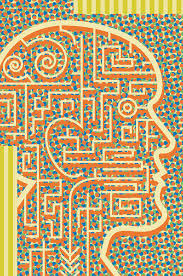
human maze

At the conclusion of yesterday’s blog, I mentioned a topic that is dear to my heart, while not saying just what that topic might be. Even now, clearly articulating that topic in a simple phrase is difficult. Before sitting down to write today, I did a little reading online and landed on an article (see the link at the end), taken from an online source called the International Socialist Review. I’m sure better sources exist but this piece offered some of the thinking that I believe has landed us in a dire condition in many spheres. While not specifically using the language I have come to prefer, the article, when its implications and assumptions are recognized, outlines what I have come to call a “technological model of humanity”.

Consistent with oversimplification (and the accompanying polarization), the author contends that the choice is stark: either accept capitalism which holds to a fixed view of human nature (supposedly) or embrace socialism which sees human nature as adaptive (another supposedly) – something coming into being; something that is always malleable.

While this may seem to be one of those “who cares” moments for many, it shouldn’t be. As I will try to explain as this blog develops further, ideas that strike us as irrelevant to the reality of our day to day lives do, in fact, have the potential to determine far many more things than we might imagine. So what is this technological model of which I speak?

By way of contrast, in the last blog I referenced the “indefinable character of ideals such as virtue, goodness, etc”. In a broader context, I do not hold with a somewhat dominant view that human beings are fundamentally mechanisms that can be adjusted and “improved” in much the way one might hope to build a better car or computer. It may very well be a result of my background in literature but I do not apologize for continuing to believe that there is something impenetrable about both this universe and us.

As a simple illustration of this notion, I would often ask students to consider a sunrise or a favourite piece of music. We can all grasp the idea that, in either case, we find something attractive that draws us. The exercise was my attempt to show just how difficult it is to nail down, in concrete terms, exactly what it is that MAKES them attractive. In the case of the sunrise, we might speak of the colours, or the overall “beauty of the scene”. If it were possible to extract the colour or the perceived “beauty” from the event itself, everyone agreed that such a display wouldn’t account for that thing’s “power”. In other words, to revert to the old gestalt notion, in some indefinable way, the whole is frequently greater than the sum of its parts.

The authors of the article I’ve referenced imagine any view of a fixed human nature as death to human development. They discuss at great length how social structures are reinforced by assumptions about human nature, those assumptions originating out of the desire of the powerful within society to remain at the top. Chief among these assumptions is that human nature is fundamentally bad. If we didn’t oppress, (so the argument goes) the wheels would come off the bus and all would descend into anarchy.

As I’ve argued repeatedly, such simplistic overstatement lends little credence to an article or an argument. So where do I begin to present my own view, and why do I care? I’ll leave you today with one of my favourite renderings of our mysterious humanity, courtesy of Alexander Pope.

from An Essay on Man

Placed on this isthmus of a middle state,
A Being darkly wise, and rudely great:
With too much knowledge for the Sceptic side,
With too much weakness for the Stoic's pride,
He hangs between; in doubt to act, or rest;
In doubt to deem himself a God, or Beast;
In doubt his mind or body to prefer;
Born but to die, and reas'ning but to err;
Alike in ignorance, his reason such,
Whether he thinks too little, or too much;
Chaos of Thought and Passion, all confus'd;
Still by himself, abus'd or disabus'd;
Created half to rise and half to fall;
Great Lord of all things, yet a prey to all,
Sole judge of truth, in endless error hurl'd;
The glory, jest and riddle of the world.

http://www.isreview.org/issues/47/wdss-humnature.shtml,

And now for something completely different.

herd mind

To date, my blogs have been exclusively my musings on whatever struck my fancy but now I’m going to mix it up a bit. I’ve been involved in a very interesting exchange (with someone who shall remain anonymous) over my blog “Grey is the best colour” from a couple of days ago. The exchange is one I find heartening. It’s fun and my fellow conversationalist displays the subtlety that I find so lacking in so many spheres these days. I suspect the conversation will continue but I thought you might like to see how things have gone so far.

_____________: I understand the notion of contextualization and the philosophical importance you are attaching to grey, however, I am reminded of a statement I often make in classes I teach. “Moral relativism is intellectual cowardice.” Sometimes the world is about blacks and whites, and standing up for black, or standing up for white, are the only two choices, because any shade of grey is de facto white or black. Get my drift? Sometimes the aberration from the standard is to fall holus bolus into moral vacuity. Another thoughtful piece. So glad I saw the first one.

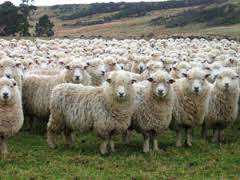
Me: I agree with your general contention: positions – clear and unequivocal – are frequently required. What bothers me in our pronouncement-happy world is that such pronouncements commonly take the place of a supporting argument. While the motto, appeal or “call to action” might appear clearly defensible, without an understanding of how one arrived at such a place, actions become shallow and little more than the herd mind at work. In such an environment, especially when media coverage/frenzy is added to the mix, the result can be a radicalized group of slogan chanters fueled by emotion without understanding. Taking a position – clear and unequivocal – should be the end of a process, not where one begins. And thank you for the thoughtful comment.

_____________: I agree with the idea that position should be based on some understanding rather than blind acceptance. But if we applied that logic to many things, the outcomes I believe would be deeply distressing to most. Like the Allegory of the Cave, the truth is hard to take, like turning the lights on in the morning. This relates to John Rawl’s philosophic notion of the “veil of ignorance,” or even John Lennon’s song “Imagine” for that matter. But here’s a thought. What if we take a position on an issue without entering the process of meditation you allude to, and instead take the position by stripping ourselves of our preconceived notions, biases and hang-ups? Chances are, the just or virtuous position would be on the only option left on the table. The magic is then realized by reassuming our inherent biases and still ending up at that point- whether it be black or white.

Me: “Know thyself, presume not God to scan” to coin a phrase. I have a fundamental, core conception of life that includes an element of mystery in all things, including the self. It is difficult for me to imagine recognizing all of my “preconceived notions, biases and hang-ups” let alone being able to rid myself of them, even for a moment. To my way of thinking, being rational requires that we recognize the fluidity and indefinable character (at the very least, some small part) of ideals such as virtue, goodness, etc. While I will forego the opportunity for the moment, this exchange offers me an excellent springboard into a topic that is dear to my heart. As for just what that topic is, tune in another day.

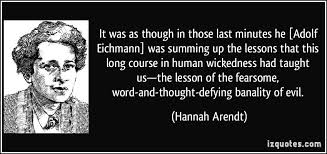
The Banality of Evil (with a nod to Hannah Arendt)

Banality of evil
This past fall I was able to spend some time in Europe, more specifically, a variety of places in “central” Europe, a part of the continent I have long known of but about which, as it turns out, I knew far less than I thought. I chose one place quite specifically – Krakow, Poland – as it serves as a common gateway for a visit to Auschwitz, that most notorious of camps amidst the most notorious event in all of human history, perhaps: the Holocaust.

I’m not sure where my interest in the Second World War originated but it might have had something to do with growing up with my Aunt Fran, someone who remembered the war with an odd mix of fondness and regret. She certainly remembered the pain and the sacrifice but she also held dear memories of friendships and of experiences that were deep and profound. I was fortunate to have a good history teacher or two along the way as well and that probably helped.

Regardless of the origin, by the time I was in junior high school I was an avid reader of texts dealing with WWII and, especially, with Hitler and the Nazis. As I grew older, I came to focus increasingly on the Holocaust, my chief motivation being my desire to understand how something so heinous could be undertaken by anyone. Various studies posited a long history of European anti-Semitism, economic factors, scapegoating, etc., but none of these, to my mind, addressed what was, for me, the central question: how could one human being do such a thing to another?

Auschwitz was the third concentration camp I have visited in my lifetime and my particular focus was Auschwitz-Birkenau, the much larger camp designed specifically for the express purpose of efficient extermination of human beings. Auschwitz is an hour’s drive outside Krakow through a typical rural landscape. The original camp has numerous displays which attempt to bring home the horror and the enormity of what the Nazis undertook. Rooms full of prosthetic limbs, eyeglasses, suitcases with names on them, human hair: each and every one defies comment.

As for enormity, the sheer expanse of the Birkenau site (and the familiar elements seen in so many movies: the rail platform, the entrance, etc) boggles the mind. A display which explains the mechanism of the crematoriums deepens the dismay. How could the human imagination conceive of such a thing?

And yet, for me, one of the most arresting experiences was a photograph of the unloading of prisoners from railcars. While hundreds are being corralled, in the middle foreground, two soldiers – seemingly content – are in conversation, one quite animated and the other standing with a cigarette in his hand. It is apparent that they are largely oblivious to what is happening around them. Are they discussing the weather? Domestic affairs? Gossiping about the commandant? They are distinctive amidst the scene because they appear so appallingly normal.

So I am no closer to really comprehending how anyone gets to the point the Nazis and their sympathizers did. While the scale is different, I struggle as well to understand how radicals in the modern world, most recently in France, can hold to the idea that murder and slaughter are justified as a matter of faith. In the broadest context, many will speak of the “inhuman” actions of the perpetrators.

Which brings me, finally, to the point of this blog. Beware the distancing we undertake when we look at the actions of Nazis, fanatics of any ilk, domestic terrorists, and others we accuse of committing inhuman acts. Their acts are, sadly, exclusively human. To the best of my knowledge, no other species on the planet has ever sought to systematically exterminate people or kill all those whose convictions – religious or otherwise – do not match their own. These are the things human beings do to one another. When it comes to mass murder and the destruction of the innocent, only human beings can lay claim. And, as I’m always arguing in this blog, that in no way discounts the human capacity for decency, self-sacrifice and love. Still, let’s not forget that where evil is concerned, there are no “others”. There is only us.

Grey is the best colour

grey et all I was talking to a former student of mine last week and she was bemoaning the state of the world in general but, more particularly, how difficult it is to change the way people think and act regarding things that have more impact on their lives than most would credit. Politics is the obvious example but that is the subject of more than a few blogs to come. For now, I prefer to deal with the issue in more general terms.

This issue matters to me because, as I mentioned in an earlier blog, friends have often accused me of cynicism, a charge I refute at every opportunity. The cynic, as defined by Dictionary.com is “a person who believes that only selfishness motivates human actions and who disbelieves in or minimizes selfless acts or disinterested points of view.” The nature of the definition itself serves to illustrate what annoys me about being called one. This “person”, in order to strictly conform to the definition, would need to spend all of his/her time assessing ALL human action in such a way. In truth, while I know it isn’t intended to suggest such a thing, it can’t help being valuable as an illustration of what simplistic labeling tends to promote.

Who among us has not been cynical about something? In fact, if regarded as a simple feature of human behavior – a common one, in fact – is it so difficult to believe that self-interest is an element in the things we do? What frustrates me on a regular basis is how readily people are dismissed (even condemned), especially public figures, if so much of a hint of self-interest is evident in anything they do. In this absolutist view of charitable work, for example, one is either the next best thing to Mother Teresa or a grasping con artist seeking to sway public opinion in one’s favour even while busy pursuing personal gain.

As an idealist, I prefer to take the long view. Finding examples of bad behavior becomes easier as more and more of our lives becomes public. Facebook and other social media invite certain of us, it seems, to put on display – potentially for all the world to see – concrete examples of pettiness, prejudice, misogyny, and all varieties of extremes that most of us would choose to hide even if we were subject to them. That being said, surely we do not accept the idea that any person’s totality can be captured by one facet revealed through an intemperate remark or thoughtless action? I suspect all of us have had thoughts of which we would prefer no one ever become aware.

And yet, for all of the world’s flaws, we still manage to make occasional progress here and there, usually as a collective first, and then as individuals. Attitudes toward slavery provide an obvious example. I’m hard-pressed to think of anyone who would defend the concept today even as I acknowledge that prejudice is alive and well in the world. The reality of the latter does not support the notion that things haven’t changed. To my mind, the most remarkable shift of the last twenty odd years remains attitudes toward sexual orientation. To be openly gay twenty years ago was to invite all kinds of trouble. In Canada today, as a societal principle, it hardly causes a ripple.

All of which is to say, this idealist continues to believe that goodness is real and, in fact, evident in the world. And so, too, is evil. Somewhere in the mixing of the two arises the dynamic of day-to-day experience – in each of us and in society at large. We do not live, either in our own lives or in that larger world, in black or white. Everywhere you look, expect to find grey.

The life well-lived

In Praise of the Great Bull Walrus

by Alden Nowlan

I wouldn’t like to be one
of the walrus people
for the rest of my life
but I wish I could spend
one sunny afternoon
lying on the rocks with them.
I suspect it would be similar
to drinking beer in a tavern
that caters to longshoremen
and won’t admit women.
We’d exchange no
cosmic secrets. I’d merely say,
“How yuh doin’ you big old walrus?”
and the nearest of
the walrus people
would answer,
“Me? I’m doin’ great.
How yuh doin’ yourself,
you big old human being, you?”

How good it is to share
the earth with such creatures
and how unthinkable it would have been
to have missed all this
by not being born:
a happy thought, that,
for not being born is
the only tragedy
that we can imagine
but need never fear.

Have you seen the movie “It’s a Wonderful Life”? If you haven’t, it would be hard to miss its presence around Christmas time. It has attained the revered status of “Christmas classic”, along with innumerable versions of Dickens’ A Christmas Carol as well as some more modern offerings. For me, “It’s a Wonderful Life” has become a tradition. One way or another, I – and as many family members as I can talk into taking the time (some actually want to join me) – sit down for the annual screening.

While some might be ready to leave Christmas behind for another year, I was reminded of this favourite movie of mine when I attended the funeral of an old friend’s mother this morning. This is a family I have known quite literally since birth so, as you might expect, I’ve always thought I “knew” them.

When the funeral mass was over, a member of the Catholic Women’s League (an organization to which my friend’s mother had belonged for 62 years) came to the lectern and delivered what was, in essence, a very brief eulogy of sorts. It recounted the speaker’s experiences with _____ throughout the years and both the affection and the regard were obvious. I found it quite touching.

And remarkable, in the original sense of the word: deserving notice and worthy of comment. This was a life lived within a circle of family and of friends that might not have gained any universal notice but, to those who knew her, hers was a life well-lived. It involved traits that we value such as loyalty, determination, dedication, good humour, compassion and, ultimately, love. She was a presence in the world to all those who knew her and she will be missed, certainly, but, equally important, she will be remembered with fondness and with love distilled in memory.

I’ve often wondered why “It’s a Wonderful Life” has the power over me that it does. No matter how many times I watch it, it still gets me. George’s struggle with creeping despair, with frustration, with trying to figure out what his life signifies articulates something deeply human for me. I experience a range of emotions while watching but I always end in the same place: grateful to have my chance at living.

We live in an age where “remarkable” has come to mean “outstanding”, and, in order to be outstanding, we need to be noticed, a fact which goes a long way toward explaining why so many “put themselves out there” on the internet. If someone notices, a validation of sorts is gained. If we have enough “likes” for our Facebook post or our tweet we have the proof we need that we matter in an often sterile, digital age.

I feel this funeral I attended provided me with some insight into my love for “It’s a Wonderful Life”. For all that the central character, George Bailey, is remarkable within the context of the movie itself, it is his brother and others who have all the apparent success and renown. George, in many ways insignificant in his own eyes, is anything but for the friends and family who surround him. Similar to my friend’s mother, the most remarkable thing he did was live his life well.

While the details of what that means for the individual are just that – individual, the broad outlines are available to us in many ways: through friends, loved ones and, occasionally, through the “outstanding” who make their presence known in the broader world, to name a few. All of us, though, live most of our lives in the spotlight of those closest to us. Surely, that is the best place to shine.

See the world: it’s complicated

complexityI wish it were possible to ensure that more people had the opportunity to travel. And I’m not speaking of a winter trip to Florida or the Caribbean: I’m referring to what I would call life-altering travel, the type which can be jarring as you are forced to adapt to customs and practices which are outside your experience. This brand of travel requires that you escape the cocoon of North American reality which comes with so much of what we see on travel websites. When you opt for the cruise or the safari or whatever, chances are the objective will be to retain as many of the comforts to which the average North American with the means to undertake such travel is accustomed.

The stated objective of this blog is to argue repeatedly that things are not as simple as solutions offered in letters to the editor or through protests on any number of issues might indicate. Modern discourse is dominated by “positions”, even as the implications and subtleties in any position are seldom a subject for discussion. If you are branded as anything (think conservative, liberal, radical, misogynist, environmentalist, anything else you might want to label), images exist in the minds of most individuals of what such labels imply, even if no one is in any hurry to define such things explicitly. At some level, most people assume that such definitions are self-evident.

Implicit in such an assumption is the notion that human experience is largely shared; that habits, attitudes, foundational moral principles, etc., are a common heritage. In a certain sense, this might be true. I can’t think of any society which explicitly countenances murder, for example. However, if you are thinking about that statement, I bet you can summon an exception, in the sense that certain factions very obviously believe that killing can be justified. Today, we need only look to Paris for the most recent example.

I’m pointing to that extreme example to make a larger point. This “global village” that we share – and our attitudes toward and assumptions about it – is subject to the same oversimplification that so many things are. Even if we don’t spend a great deal of time articulating it, we all carry an image of reality with us. Currently, that reality seems to be more and more about “us vs. them” in so many arenas. The “us” includes all those perceived elements throughout the world that aspire to become like us: seeking democracy and freedom, wanting business modeled on Western examples, etc. The “them” are all those forces that oppose “us”. Please note that my definitions are necessarily vague. That vagueness embodies the aforementioned oversimplification.

Travel to parts of the world which are decidedly NOT North American, or generally part of the more developed world, reveals that nothing is quite that simple. Whether in Ghana, Thailand, Malaysia, or elsewhere, my personal travel has convinced me that while many parts of the world aspire to our affluence, they are not seeking to become us in any more comprehensive sense. Cultures with values and traditions thousands of years old can hardly be expected to imagine themselves as our poor cousins.

Internalizing this realization can lead to an appreciation of the subtlety inherent in any position or belief. Factionalism is the enemy to my mind. As soon as anyone settles on a fixed position as absolute, thought is banished. Allowing for complexity in virtually anything is the road to an open mind. An adage I’ve developed for myself regarding most things: if it looks simple, I’m pretty sure it’s complex; if it looks complex, I hope you’ve got some time on your hands.

An education agenda, please! (conclusion – for now)

21st century learningFirst, while purporting to be some brand of novel approach to the development of the person, it is little more than common sense. Does anyone doubt that we learn in many ways and frequently throughout the course of our lives? Even if we might not think much of the “learning”, the child who spends inordinate amounts of time with video games learns how to play with greater and greater skill. While I may be wandering into ideology myself here, I can’t avoid stating –to me, as an obvious reality – that human beings learn even in spite of themselves. The unstated (and, to my mind, insidious) real issue for those who want “learning” to replace “education” is the control of what is learned. This inevitably leads me to another of my favourite topics (one which I will explore in later posts): the ascendancy of a technological conception of human beings.

More significantly and negatively, the “Learning Agenda” assumes that clear directions for significant learning exist while feeling no obligation to provide even a single example. Certain catchphrases are offered in the place of substance: “we need to teach critical thinking skills”; “we need to become lifelong learners”; we need education for the 21st century”. The list could be expanded considerably since an entire language and vocabulary has grown up around the modern “educational industry” (more on that in a later post as well).

The gravity of this cannot be overstated: when definition and exactitude are lacking, how can anything meaningful be developed by way of assessment, analysis or evaluation? Furthermore, when these are absent, how can we ever determine success? And so we find ourselves fundamentally adrift as far as education goes. We look to standardized tests to provide us with evidence that something is working; we lionize the media-friendly examples of “success” (think of the history-or-some-other-subject project in an elementary school that garners attention) while ignoring the ample evidence that most schools and classes do not enjoy such “success”. And, finally, we have innumerable conferences and studies which tell us that all is well and that we are always improving and getting better. And why should we accept that? Because “we” says so.

An education agenda, please! (part five)

education vs learningThe most immediate example has already been mentioned: the substitution of “learning” for “education.” While this may strike many as a small and insignificant change, in fact, in practice, its impact is profound. When “education” was the preferred term (and indeed it is still the word used in common parlance among those who are not working in the system per se), the consensus was fairly clear even if it was not as well-articulated as might be hoped. Education meant, in general terms, ensuring as much as possible a suitable (based upon age and grade level) mastery of reading, writing, mathematics, history and geography, general science and other locally preferred subjects (in New Brunswick, French language comes to mind).

As a result of the above assumption, teachers were regarded as expert in a particular subject discipline and, consequently, responsible for imparting knowledge and understanding to students. Those who oppose this traditional model, commonly picture this as a sterile process where teachers stand in front of classes, ask largely meaningless questions and demand prescriptive responses from students, and, overall, insist upon conformity at the expense of imagination, critical thinking and cogent analysis. Nothing could be further from the truth. It has always puzzled me that so many of those critical of this model have achieved a level of success that would seem to offer at least some validation of the system in which they were themselves trained. Beyond that, an entire culture that traces its roots to the time of Ancient Greece, when it looks to understand its remarkable advancement through 2 ½ millennia, should feel both profound gratitude and deep appreciation for an educational process that has made so much that is laudable possible.

The embracing of “learning” at the expense of “education”, while seemingly innocuous, represents just one more attack on the core assumption of “education” that there exists a body of knowledge not only worth acquiring but also essential to the development of critical faculties and capacities. A “Learning Agenda” wants to convince us that previous definitions of education were too narrow and limiting. The “learning” that each of us needs is not defined; rather, the concept lives and dies on the premise that learning is “lifelong” and multifaceted, far too comprehensive, in other words, to be confined to such a restrictive term as “education.” While this sounds noble and even inspiring at first glance, it does not survive careful scrutiny.

An education agenda, please! (part four)

confusion in education

Returning to the stated theme of this multi-part post: One of the premises of the Learning Agenda initiative is that, as a province, New Brunswick does not value “learning”. This assessment was offered – in a manner infuriatingly confident – as an evident truth. Hence, we need to enhance that appreciation so that we might create New Brunswick as that rather nebulous entity, “the learning province.”
Looking beyond the difficulty inherent in any definition of such a thing, I question the core assumption that New Brunswickers do not value education (a term I much prefer to “learning”). I believe we, as a province, absolutely value education as an abstract notion. The problem arises when people assess their own experiences with the system that is the centrepiece of our educational efforts: the k-12 public school system. Again, I am forced to depend on my largely anecdotal thirty years of experience in that system.
As a teacher who dealt primarily with students in Grades 11 and 12, I was meeting young people at the end of their journey. Additionally, I was dealing with the parents of a number of those students. Through students and parents both, I became acquainted with “stakeholders” who were largely discouraged and disillusioned as a result of their experiences in the system. It wasn’t that anyone disparaged learning and its value; rather, a common theme was that the system had failed in some indefinable way to provide those skills that one and all seemed to realize were lacking. And yet, because of the obscurity surrounding method and practice in the system, it was difficult if not impossible for the uninitiated parent or student to put a finger on exactly where things had gone wrong.
I hesitate to state with total assurance that this obscurantism is deliberate and planned; nevertheless, I do believe it has proven convenient at the very least. When those with an immediate interest in education (students and parents) are unable to grasp the shape and substance of the system which serves them, it is very difficult to formulate significant critiques. Hence, it is very difficult for clear and coherent criticism to be leveled by those who might be most interested in doing so, namely, those same students and their parents. Once again, I am forced to depend on my personal experience and observations to illustrate this process (tune in tomorrow!)