Welcome to the two minute hate: Canada-style

“As for politics, well, it all seemed reasonable enough. When the Conservatives got in anywhere, [Judge] Pepperleigh laughed and enjoyed it, simply because it does one good to see a straight, fine, honest fight where the best man wins. When a Liberal got in, it made him mad, and he said so,–not, mind you; from any political bias, for his office forbid it,–but simply because one can’t bear to see the country go absolutely to the devil.”
― Stephen Leacock, Sunshine Sketches of a Little Town

Harper 3
References to certain features of George Orwell’s 1984 are common; I have used them in my own musings on more than one occasion. Today I’m thinking about the “two-minute hate”, that detail in Orwell’s novel where members of the party are invited to watch a two-minute video on their enemies and summon up as much vitriol as they can and direct it at the screen. As with so many of the features of the book, it might seem improbable in its details but, in its observations re emerging trends in politics, I’m not sure how far off the mark it really is.

I’m referencing the response I tend to hear from any number of friends when the subject of our current Prime Minister comes up. At the mere mention of his name, or even a general reference to the federal government, I’m liable to hear “I hate Harper” as a preface to whatever is to follow. Chances are the face twists into a frown and a certain real passion is evident as a brief elaboration on all that is wrong with Steve follows. Mind you, I’ve learned not to ask for details. The response seems to be largely visceral, a generalized abhorrence not necessarily connected to anything specific; rather, it’s a felt sense of “something wrong”, that some fundamental core principle at the heart of Canadian democracy is being violated constantly. “Dictator” seems to be a favourite word when summarizing the overall impression of the man himself.

Harper 1
This bothers me, not because I’m a defender of Stephen Harper and his government, necessarily, but more for what it says about the regard we have for the system in which Stephen Harper operates. If you’ve followed my recent blogs regarding the niqab and Bill C-51, you would know that I’m not some right-wing conservative ideologue trumpeting the majestic achievements of our current federal government. At the same time, I am appalled at the readiness with which otherwise rational people suggest that Canada is on the verge of descending into a morass of failed democracy, a disenfranchised population, and a place where fundamental freedoms are sacrificed on an altar dedicated to the establishment of a secret police equal to those found, either currently or previously, in various authoritarian regimes.
Harper 2
The thing is, I can’t pretend that I’m surprised. I started this blog to counter what I see as the rampant oversimplification of a cornucopia of complex issues in the world today. The “us vs them” mentality – and a very stark version of it – dominates public debate (or the reporting of it, at the very least) whether it is environmentalists vs pipeline builders and supporters of hydraulic fracturing, liberals vs conservatives, criminals vs law-abiding citizens, pro-life vs. pro-choice, etc. I’m sure you could add a few more if you wanted to. In almost every case, the rhetoric is heated and the arguments tend to the “my way or the highway” version of debate which, to my mind, really isn’t debate at all.

Harper 4
But real debate requires thought and careful consideration and we are not designed for that these days. When complex events are boiled down to the 2-minute newscast or, even more, the “tweet” that is delivered with breathtaking immediacy, a mentality takes hold that, I suspect, is unavoidable. We are buried in an avalanche of unfiltered information. Is it any wonder that, out of a desire to be heard above the noise, those with a message would feel compelled to boil it down to the memorable phrase, regardless of how much such a phrase might fail to represent the nuances of a position/theme/subject? We live in an age of slogans and acronyms, anything that will stick in the mind and deliver the “essence” of whatever we are being asked to consider.

I believe this is poisonous. When we seek to understand the often-rancorous proceedings of the House of Commons, the NB legislature or, for the most appalling example, the United States Congress, we need some introspection. The political class in Canada – a country where our sitting Prime Minister could be turfed this year and would, without question, bow graciously and congratulate the inheritor of the position – behaves as it does because we have made it that way. Having sat as an MLA not so long ago, I can’t help but ask: when your awareness of the business of government is garnered largely from the 2 minute clip of question period, a feature which lasts one half hour out of a six to eight hour legislative day, how informed are you? Also, if those participating in Question Period know that this “proceeding” has the greatest potential for shaping people’s opinions, is it any wonder they would seek to use it for greatest advantage?

Stephen Harper is participating in Canada’s political sideshow, one that people mistake for the actual business of government. Go ahead and disagree with the policies and laws that his government has instituted. Even better would be speaking up and critiquing those laws and policies, but without the stridency that has become the hallmark of so much of what we see and hear. And finally, if you look beyond the “show” that is conducted and the extremes of positioning that result, please recognize that Canada is a remarkable country that is, by and large, governed better than or, at least as well as, any other country in the world.

harper 5
A great deal of hand-wringing occurs when it comes to voter turnout in the country, especially when it comes to the young. Ask yourself: how attractive can voting be when the loudest voices consistently condemn our political system as broken, as undemocratic, and your vote as a waste of time because nothing changes? I’d like to hear some voices raised celebrating a system that is, certainly, imperfect but that has, nevertheless, given us 200 years free of war within our own borders, a standard of living surpassed by few and better than 80% of the rest of the world, and a culture that is largely tolerant, compassionate and welcoming of all. In the meantime, it’s time to cancel the two-minute hate, no matter who is the target. Today it’s Stephen Harper. Next? Get in line.

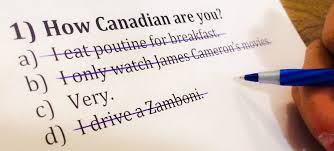
Canadian enough?

Canada is the only country in the world that knows how to live without an identity.
– Herbert Marshall McLuhan

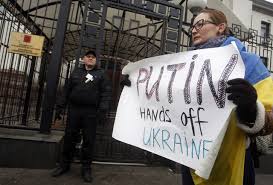
As promised, the rallies in opposition to Bill C-51 went ahead and, I suspect, they have had the impact I would have predicted: they made a newspaper here and there and probably were reported in other media but, overall, the voices raised in protest will join the ranks of others at similar events, events important perhaps to the few who were involved, but largely ignored by the general populace. Most people went about their business confident that the country wasn’t going to descend into dictatorship and become a police state anytime soon. One need only look to Russia for an example of what such a process really looks like. As one commentator pointed out, can anyone imagine a scenario where Stephen Harper would take charge, personally, of an investigation into the assassination of a political rival? In Canada, we leave the policing to the police; in Russia, Vladimir Putin increasingly seems to be the sole voice of law and order, if you can call it that. But I digress (but only slightly).

Canadian 4
I’m mentioning Bill C-51 because it segues nicely with another controversy that I believe is rooted in a similar, core issue: “values”. I’m referring of course, to the court ruling which supported a woman’s right to wear a niqab to a citizenship ceremony and the subsequent decision by the federal government to appeal that ruling. In a manner similar to the response to C-51, both opponents and proponents of either side are lining up and leaning toward “outrage”, the default position it seems these days for just about anything one might support or decry.

On the one hand you have those who view the controversy as a matter of religious freedom, as outlined in Canada’s charter. Personally, the law being the law, I expect this view to prevail. It seems pretty clear that the woman in question has no other reason for wanting to present herself veiled beyond the convictions of her faith. The other side interests me far more by virtue of its important but nebulous appeal to “Canadian values”, as in “covering your face while you are participating in a citizenship ceremony goes against Canadian values”.

Canadian 1
I know many other fine examples of oversimplification exist but rarely does one of this caliber come to the forefront of public discussion. Whoever makes the claim for this violation of values assumes a willingness among those hearing it to simply nod assent and express something along the lines of “yes, as a Canadian, I don’t want anyone covering his/her face while swearing allegiance to the queen and the country”.

At the risk of being accused of treason, sedition or some other soon-to-be-defined offence, I have to ask: what “value” is it exactly that the niqab-wearer is violating? Please don’t think I am disparaging this position in favour of the other. As I’ve already said, I think the law falls on the side of the niqab wearer. But making the issue a question of some overarching set of Canadian values is of especial interest to me because it assumes that such an animal exists and is clearly understood by all. I can only speak for myself here, but am I alone in feeling that any such a value-set is far from clear?

We have instruments of law that outline rights which seem to coincide with, or emerge from, values of some kind, but the niqab example serves to illustrate extremely well just how complicated things can become when elements are added to the equation that probably no one envisioned when the charter was devised. In particular, public fear of the radicalized versions of Islam embodied in al-Qaida, ISIS and others creates an atmosphere where people can feel that something they treasure – even if articulating that “something” might be difficult – faces a tangible threat.

And the niqab is both tangible and exotic. I can’t recall having seen one around Saint John until a few years ago. Having spoken with some who are adamant in their opposition to the niqab, I know they associate it, negatively, with all kinds of things that might fit within that Canadian value arena: oppressed women, extremism, religious fanaticism, etc. And I’m with them inasmuch as I believe values are key to the manifestations of angst we see over both Bill C-51 and the niqab-wearer.

Canadian three
However, just what those values are presents a problem. When the Prime Minister appeals grandly to Canadian values while announcing plans to appeal the niqab ruling, he does a disservice to us all. Politically, such a narrow opposition may serve him well but the entire question deserves a closer look. IS it consistent with being Canadian to go around in public places with your identity obscured? Will we equally require teenagers and others to remove their hoodies, a feature of certain apparel which rivals the niqab when it comes to hiding your face?

Canadians have been accustomed to define themselves by saying what they are not.
– William Kilbourn

Really, the larger question concerns that age-old dilemma: what, precisely, does it mean to be Canadian? Growing up and later studying Canadian literature, I heard a variety of voices on the subject. The only place consensus seemed clear concerned our neighbours to the south: whatever it meant to be a Canadian, we definitely WEREN’T American.

Perhaps, as the world becomes increasingly complex and we are challenged to accommodate more and more differences from some vaguely stated, but commonly felt, norm, the time has come to give some thought to just what values we do cherish as Canadians. My point always would be, simply, it isn’t a stark choice between tolerance and intolerance. Somewhere amidst the fear of terrorism, anxiety over things that are new to many, and a general unease as the world seems increasingly chaotic lies a Canadian identity. Maybe it’s asking too much that we try to articulate clearly some common principles that define us but we certainly won’t know unless we try. If that is to happen, we need to scale back the “us” vs “them” rhetoric and, in today’s public arena, that might be the hardest task of all.

Canadian 2

The elusive in-between

“It seems the only way to gain attention today is to organize a march and protest something”.
– Billy Graham

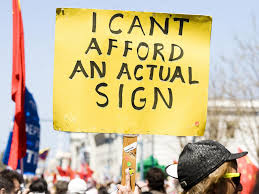
While online today, I was invited to sign up for an upcoming rally opposing the implementation of Bill C-51, the federal legislation that will expand the powers of various agencies tasked with combating terrorism, ostensibly in an effort to make the country safer. According to the invitation, I would be attending an event designed to oppose the Harper government’s intention to establish a “secret police” force within our borders. I have no plans to go.

protest 2
I do, however, have questions myself about the efficacy of C-51, this latest salvo in the “war against terror” here in Canada, but I am equally unimpressed by this group that wants a “national day of action”, as though a bunch of people waving placards and chanting (no doubt) a variety of slogans is the best public response to just about anything they don’t like. As I remarked to a friend this morning, what chance for discussion is there when those opposed to something have already branded those they oppose as Canada’s version of the Gestapo?

It’s a sad day, really, but it has been a long time coming. The impatience that society seemingly has with anything that requires subtlety and careful attention cannot be overstated. Simply put, it is much easier to attend a rally and carry a sign than it is to take the time to read and understand a proposal or, for that matter, to just think about it for a while without jumping to conclusions or following whoever has adopted a resolute response before you. Never underestimate the power of the bandwagon effect.
protest 1
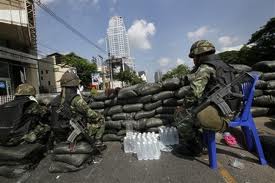
Please note that the federal government is essentially employing the same tactic in their approach to seeing that the bill is passed. Riding a wave of popularity as the result of their perceived hard-line in the face of terrorism, the feds are pushing ahead with the bill in its current form more, I suspect, to reinforce their image as strong and resolute than because of any deep and abiding conviction that C-51 is the best possible way to confront whatever threat might exist within Canada.

I use the word “might” conscious of the impact it could have. In the current atmosphere surrounding this topic, I’m liable to be singled out by some as an apologist for terrorists, as though, again, anything other than enthusiastic support for dramatic and tangible opposition is equivalent to being an ISIS sympathizer. Outrage tends to be what makes the news after all. Few are those who want to pause and reflect and subsequently seek out other opinions in order to develop a more nuanced and careful approach to any topic. “Us” vs “them” is the paradigm that dominates discussion (or conflict that passes for discussion) of just about any overarching issue these days.

We shouldn’t be surprised when we see this tactic employed. My experience has convinced me that the average person pays little attention to things beyond the purview of his/her day-to-day living. As a culture, we have become so “busy” that we have very little time to pause, to survey, to consider and to reflect upon the issues that we face. For that matter, the speed with which technology advances doesn’t allow us time to assess the most recent “next big thing”. Within six months of its introduction, that next big thing is largely obsolete, more often than not.

protest 3
When politicians and groups seeking public support for a position appeal stridently for the simple yes or no, arguments are inevitably reduced to the “us” and “them”, namely, those who support our position and those who oppose it. Rarely are even the simplest of things readily reduced to such terms. We might, for example, establish clear boundaries for our children but the process of growing up is an unfolding story of prohibitions being qualified, changed and, even, abandoned altogether. When dealing with our kids, we realize that maturity brings deeper and subtler understandings of many things.

How I wish we could apply a similar standard to our understanding of the larger issues of our day. In the case of C-51, I’m not sure what the answer is. By and large, Canadians are concerned about radicalized Islam, especially when ISIS and al-Qaida go out of their way to identify Canada as a prospective target. Add to that events over the last year, and fear is to be expected. At the same time, do we need a national lockdown and expanded powers for our national security agencies? I don’t pretend to have the strategy to address either the situation or the questions it raises. I do, however, believe that we need to do something. The federal government has chosen to move in a particular direction that causes me unease, but, as I said earlier, I won’t be attending the protest on the weekend.

protest 4
More than anything, I wish we could find a way to engage people that didn’t demand such oppositional posing. In a world where so much information is available, you might think that being informed would be easier. Unfortunately, the sheer volume is problematic but, even more, the indiscriminate nature of the information itself is the greater challenge. How does one distinguish between the pertinent and the irrelevant when a search on Google reveals 171,000,000 hits on C-51? Is it any wonder that people are so often content to focus on the concerns of their individual worlds? Eventually, though, the larger world will inescapably intrude. We need to be ready for such eventualities, even if we must continually challenge just what being ready means. Contrary to what the “no” voice shouts so frequently and so persistently, Canada remains a democracy. However imperfectly that concept might manifest itself here, to borrow from Robert Frost: “I don’t know where it’s likely to go better”.*

*”Birches” (1913-14)

Weather day(s)?

Apparently with no surprise
To any happy Flower
The Frost beheads it at its play—
In accidental power —
The blonde Assassin passes on—
The Sun proceeds unmoved
To measure off another Day
For an Approving God.

– Emily Dickinson

Another day in February here in New Brunswick and, yet again, more snow than our well-settled community can cope with easily. We’ve all seen snow before, but even the hardiest among us cannot recall anything quite like this.

snowfall two
Just the other day I found myself on some streets that I hadn’t traveled since the first of the big storms and, I confess, I was amazed. And these were not side streets; snow-bound major bus routes had me squeezing off to the side to avoid collisions with oncoming traffic. I was equally dismayed when I stopped by the grocery store and was confronted by snow mountains in the parking lot. Now, we’re all accustomed to oversize landscapes when the plows have done their work but this was something else again. I felt as though I had an opportunity, should I choose to pursue it, to experience an alien landscape. Height is something you expect of snowbanks in parking lots during the winter but it was the depth that amazed me. I don’t think the stores are going to be crowded out any time soon, but the proximity of these behemoths to parking spaces ordinarily well-removed from such accumulations seemed almost intimidating. If anything can be said to “loom”, these banks were certainly looming.

snowfall 1
Weather is an important thing everywhere, no doubt, but countries that tend to experience extremes throughout the year are especially prone to having the weather become THE ice-breaker in conversation. A few years ago, I spent a summer month in Northern California. Every day – no exaggeration – the temperature moved within one or two degrees of 90 Fahrenheit and I did not see a cloud, at least not that I can remember. I clearly recall the elation I felt when I came home, looked up at clouds in the sky, and felt a breeze blowing off the water. For a good portion of the year, in certain places (the part of California I was visiting is one of them), you can completely ignore the weather, simply because you know it is going to be essentially the same tomorrow as it was today and the day before. Go ahead and make that plan for a birthday party six weeks from now! So strange for someone like me to see such assumptions at work.

picnic
Beyond the weather itself, even more unusual for me was how absent conversation surrounding climate really was. Does a day ever go by in our neighbourhood where we don’t spend some time assessing either the immediate conditions or the trends we’ve seen over the last while? I had some guys in this morning to look at some repairs I need done and it didn’t take long for us to begin a comparative analysis of this winter to last. In summary, the consensus was that last winter was tougher overall but nothing could quite compare to the last 4 or five weeks, both for the sheer volume of snow and for the persistent bitter chill.

We have so many reasons to be grateful for where we live. Some would argue that the weather represents something we must endure, an unfortunate consequence that we can’t do much about other than accept. Personally, I prefer to see it as our particular “world”. Among other things, travel has taught me just how particular each world truly is. While my travel mode – figuring everything out on my own – isn’t for everyone, I prefer it to organized touring because I feel it gets me closer to the reality of the places I visit. In my experience, the organized tour insulates you from many of the experiences that might reveal most about a place and its people.

violence
We have it good here in snowbank New Brunswick. Winters such as this one bring challenges and frayed nerves certainly, but ours is still largely a world where we can feel secure in our homes and free from the threats of violence that seem to affect more and more places every day. If people stay away from our part of the world because they find the climate unwelcoming and the pace of things a little too slow, I understand. But this is the world that many of us call home. And I have no doubt, if suddenly we turned tropical, a part of all of us would miss the storms and the unpredictability of it all. More than a few conversations would never even get started.

Do you have the time?

It’s amazing that the amount of news that happens in the world every day always just exactly fits the newspaper.
– Jerry Seinfeld

Over the weekend, I was reading an article in “The Globe and Mail” talking about how we consume news these days. I wasn’t surprised to read that most people – of generations subsequent to mine – rarely depend upon print; I had noted some years back, when I was still teaching, that, in a class of thirty students or so, roughly one third of households might be expected to have a subscription, in this area of the province, to Saint John’s “Telegraph Journal”. And that is being generous.

Headline 1
Increasingly, print publications are moving online. Having an online version plays well in a world that depends upon iPhones and iPads for so many things: grocery lists, tickets for the movies, maps, phone numbers, contact information, quick fact checks, etc. If you think about it, “pervasive” may rank as one of the greater understatements of recent years when it comes to assessing the penetration of the digital in the various facets of our lives.

As I’ve said in other blogs, I am no Luddite. Return to some mythical age where one and all were better educated, more aware and more involved in their world? Can’t see it. Does anyone really believe that such an era ever was? Mind you, a group will always exist that believes in a lost golden age.

That being said, the passing of print concerns me. More accurately, if iPhones and iPads could be depended upon to preserve the written word and lead to people spending more time pondering the world and the issues that confront us, I would applaud loudly. I have no confidence that such is the case, however, especially as impatience with anything much longer than a tweet grows increasingly prevalent. That impatience bothers me more than anything else.

headline 4
A case in point would be when I sat down to start creating this blog. I was warned that I needed to keep it relatively short if I hoped to hold on to readers (assuming I attracted some in the first place). While I was sympathetic to the plea, it seemed at odds with my reasons for starting in the first place. I was tired of the oversimplification and narrowness so evident, in my opinion, in much of public discourse and I wanted to vent, if nothing else, my displeasure.

I do not, however, see the value in shouting loudly and hurling insults at opponents, a modus operandi that commonly seeks validation through appeals to democracy and to freedom, terms that are used with utter disregard for what they do or do not mean. As with so many things (education the example closest to my heart), the unstated premise is that the definitions of such things are self-evident. Surely we all know what “democracy” and “freedom” mean?

If you are reading this, chances are I am preaching to the choir. “Democracy”, “freedom”, “equality”: these are just three particularly good examples of complex concepts that become throwaways when people are trying to shut down opposition. We see this phenomenon at work all around us, whether in the halls of government where one side or the other is seen frequently accusing the other of perverting democracy or taking away our freedoms. If you doubt the truth of this, today’s “Telegraph Journal” contains a couple of very interesting letters. Both concern themselves with the current controversy surrounding the young Muslim woman who wants to wear a niqab at her citizenship ceremony.

niqab
I’m not interested here in who is wrong and who is right. Each writer argues a point of view steeped in a particular understanding of the issues at stake: identity, religious freedom, democratic principles, freedom of speech, citizenship, etc. If it were possible to somehow eliminate the subject matter and isolate the tonal quality of each letter, I think it would be hard to tell them apart. Both adopt a kind of moral outrage and determinacy that brooks no argument. Perhaps such characteristics feature prominently in the editorial letter format. By virtue of their limited length, such writings have to be focused in order to achieve maximum impact.

If such a lack of subtlety and nuance were limited to the letters to the editor, you might say: par for the course. But when that same deficit becomes the common mode of discourse in politics and the public arena in general, who can blame people for tuning out. “Sides” on just about any issue are united in their stridency and, at some unconscious level perhaps, we know that neither side is serving either the issue or the audience well.

headline 3
We are increasingly victims of two minute radio or television spots, tweets and other social media broadcasts, and a pervasive parade of headlines, all of these – whether by design or by happenstance – providing some sense that we are informed if we just pay attention to such things.

As for paying attention, who has the time for that?

When definition fails

“It’s a beautiful thing, the destruction of words.”
– George Orwell, 1984

I thoroughly enjoy the English language. It’s willingness to adopt virtually anything as a word as long as it finds its way into common usage, regardless of origin, is part of its charm. I know some would disagree but, as an especial admirer of poetry, I’m intrigued by the subtle differences that can exist among words with very similar definitions. More often than not, variations on a theme seek precision: do you love, adore, worship, idolize, or cherish a certain someone? Certainly all five possible choices suggest affection of some sort, but a great many factors might influence which one is most appropriate at a given time. I commonly told students that the value of an expanding vocabulary was its ability to allow you to formulate ideas and ultimately express them more clearly. For all that intuition might account for understanding in certain instances, communicating ideas and concepts requires language, the more precise the better.

What happens, though, when we move in the opposite direction? The ultimate nightmare of the reduction of language to its most utilitarian was explored famously in George Orwell’s 1984, a novel I have felt compelled to reread on a number of occasions in order to remind myself of just how profoundly it outlines trends that continue to come to pass. Granted, Orwell’s vision is “wrong” in many of its specifics, but the core ideas are worth examining. His description of “Newspeak” and its ultimate goal of reducing language so that the only things that can be talked about are those concepts acceptable to “the Party” might sound bizarre, but I’m convinced, personally, that a kind of Orwellian misuse of language is happening, minus the malicious intent (the idealist in me speaking).

language and thought
In an earlier blog I argued that a perceived simplicity has become so predominant in the world that it has become almost a matter of faith that virtually anything can be reduced to recognizable and definable component parts. If I haven’t made it clear, I do not believe such is the case. In fact, I would argue that the tendency of language to constantly expand over time in order to include both new concepts and further refinements of old ones suggests just the opposite. The language landscape becomes even more challenging when a group deliberately chooses familiar language and uses it in ways not commonly understood (as, I believe, is the sad case in education).

I think most of us would agree that some part of each of us, whether it’s a large or a small part, commonly longs for simplicity. We think of lazy days at the cottage or on the beach, a life free of worries over all the things we commonly worry about, all outstanding issues, whatever they might be, settled once and for all. This desire, when paired with the often overwhelming variety of complications to be found when we open our eyes to see them, cannot help but lead most people to want to tend to their own affairs and leave the bigger issues to those with time to spend on them. Further, when we have been largely convinced that research in every field of human endeavor is ongoing and continuing to provide answers to whatever questions might be out there, why wouldn’t we tend to cocoon ourselves and “leave it to the experts”?

While such an approach might be understandable and acceptable when it comes to technological advances, the same cannot be said for education. More than any other undertaking, perhaps, education should be a reflection of the community’s highest aspirations. Sadly, based upon the direction currently evident in the educational system, with all of its attendant fanfare, the community is largely being shut out. Bewildered parents, by and large, have a felt sense of what it is they want for their children as a result of twelve and more years in school: “success”.

success
However, that very word – “success” – and the many different ways we try to incorporate everyone within the bounds of its definition, suggests why improving schools has been so difficult through time. While governments, educational researchers, and others who are the determiners of curriculum and of the focus of programs trumpet the ongoing advances being made within the system, parents can’t help feeling that something just isn’t right. What is success? While that might seem like an innocuous question, an answer might not be as easily determined as you would think. Success is more a concept than it is an observable phenomenon. In the past, the aims of a formal education were reasonably well understood: learn to read and write passably, be able to perform essential mathematical tasks and maybe have a general sense of the history of the province or country. Anything beyond the “three r’s” was interesting, perhaps, but the attainment of those basics was paramount.

Welcome to the year 2015. The average parent, when asking about a child’s progress will be buried, in all likelihood, in an avalanche of educational jargon: outcomes, formative versus summative evaluation, anecdotal reporting, learning styles, multiple intelligences, accommodations, learning strategies, peer evaluation, etc., etc., etc. In case you were wondering why I spent so much time at the beginning of this blog talking about language, here’s why.

If you take a look at the list I’ve just assembled, virtually every word I’ve included has a meaning outside a theoretical educational context. As education has become, increasingly, the domain of educational psychologists and an assortment of “experts” in the “field” of education, the distance from which the general public is forced to observe public education grows greater with every passing year. Education, as a system administered by a government bureaucracy governed by policies devised largely by people with little or no real experience in classrooms, is driven by the belief (the one I’ve been discussing for a number of blogs now) that whatever the “problem” might be in education, analysis and experimentation will provide the way forward. As the language becomes increasingly vague and inscrutable – both to those using it and to those hearing it – the distance between the theory that dominates conversations about education and the day-to-day reality grows ever greater.

2+2=5
For at least 50 years, educational theorists – and the industry that promotes both the theory and the products that inevitably accompany it – have been telling us that things are getting better and better all the time. When teachers (and society at large) look around and see fewer good readers and writers, young people who cannot do the most basic math, students whose grasp of the world is limited to what their friends and social media tell them, those same teachers and parents have their doubts. But the aura of expertise and the convolution of the language we employ when speaking of education have become so powerful, most are afraid to speak up. In an Orwellian world, reality as we experience it is always trumped by the reality that the powers-that-be pronounce. Welcome to 1984, the 2015 version.

Define “education” – I dare you!

“What a piece of work is a man! How noble in reason, how infinite in faculty! In form and moving how express and admirable! In action how like an angel, in apprehension how like a god! The beauty of the world. The paragon of animals.” Hamlet, 2.2.303-312

While the specifics of my concerns with education are complicated and often difficult to articulate, the essential core of the problem is neither. It all boils down to what is meant by “education” and, by extension, what it means to be educated. As I’ve tried to make clear in my previous blogs, even those things which seem simple, seldom are. Should you happen to find yourself in a conversation and the word “education” is used, how likely are you to stop whoever is speaking and ask them what they mean by the word? We use language with a kind of understandable indifference – after all, if English is your first language, you’ve been speaking it since before you can remember and you’ve managed to get by.

Einstein genius
Additionally, “education” isn’t a word commonly subjected to the quibbles that might accompany “love”, “faith”, or “integrity”, for example. These are but three words that can mean very different things depending upon any number of factors including context, who is using the word, or when or where it is used. Education, though? Surely we all know what we mean by that? After all, we attended school in our time and we had some great teachers. Most of us would readily assert that he/she is or isn’t educated according to an unstated scale that might use university degrees attained as a partial measure. Still, most of us probably know someone who doesn’t have the credentials in place, someone we would, nevertheless, consider “educated”.

I’ve quoted Hamlet above because, in this passage, Shakespeare articulates a view of human beings that was somewhat new at the time. A child of the Renaissance, Shakespeare (and his contemporaries) were embracing a view of human beings very much at odds with a medieval view of humanity as largely debased and sinful and very much in need of divine intervention if we were to rise above our lowly station. The “renaissance man (person)” notion exemplifies these high-minded assertions. He/she is someone who develops to the maximum possible extent the potential Renaissance thinkers imagined we might have.

Socrates
As a confessed lover of literature and the arts, I can’t avoid being moved by Shakespeare’s expression of such a noble ideal. An equally adept portrayer of human evil and depravity, Shakespeare does not pretend that Hamlet’s vision of humanity’s grandeur is all that needs to be said. But through this passage, he does provide a vision of what COULD be – an ideal, the details of which are, hopefully, to be actualized in the individual life.

Of necessity, such an ideal lacks specifics. The manifestations of human achievement are as varied as we are. At the heart of Hamlet’s speech is a conception of human possibility that is not tied to measurable “outcomes”; rather, we are invited to participate in a suggestive vision, the details of which it is up to each person to imagine. When I read passages such as this one from Hamlet, I am caught in the dilemma I often described to students as the central quest of probably all significant literature: trying to find words to express that which cannot be expressed. Another way of putting it: Shakespeare and any number of other writers inspire me, provide me with a sense of connection to the world, even provide an inexpressible grasp of life’s meaning.

Maya Angelou
Excuse me?!? The majority of those with whom I have had contact and/or discussions regarding trends in modern education would dismiss my last paragraph, out of hand, as utterly irrelevant. Such abstractions have no place in modern educational theory. The analytical model that currently dominates educational research and the theories and applications that arise as a result demands “data”. Inspiration and vision, in my experience, have little place in a world of tools and outcomes.

In order to illustrate what I am suggesting in, hopefully, a more accessible way, consider the following: have you ever had good teachers? Even a couple of great ones? I know I have. When I look over my academic path from kindergarten through university, I can say that I had quite a few good teachers. The great ones I can count on one hand. I’ll choose two. One was a history teacher I had in high school.

good teacher
Based upon my understanding of current notions of what makes for effective teaching, this guy was an abject failure. He rarely emerged from behind his desk, seldom provided a visual aid, tested infrequently at best and, overall, seemed indifferent when it came to assessment in any form. That being said, I can say without hesitation that any student who had him would include him as among the very best teachers of their lives. History to him was living and, through his telling of history, he brought it alive for his students. His thirst for knowledge – the implicit respect he had for his subject (and for so many other things that were of interest to him) was infectious. He made those who had him as a teacher want to know more.

My second example was a professor I had as an undergraduate student. She was the most unforgiving and demanding teacher I have ever had. She had a deep and profound respect for writers and for writing and expected that the study of literature would be undertaken with an effort commensurate with the work that went into the creation of the works we considered.

Aristotle
What unites these two, regardless of their differences in style, is the ability to inspire. Without ever really articulating it, they were presenting an argument that “education” – as opposed to the modern substitute, “learning” – was not about utility but about personal fulfillment. As students, we were being invited to have a glimpse of that humanity, of that world, that Shakespeare allows Hamlet to suggest. Whatever problems we might believe are present in education today, the root cause of the overall crisis, – and this is the central tenet of my overall argument – is the abandonment of an IDEAL of the educated person in favour of a pseudo-scientific IDEOLOGY that imagines human beings as component parts awaiting improvement if we can only identify more clearly what parts need adjusting and/or enhancement. And so the system and its many supports carry on with their futile quest to develop the “strategies” and “tools” that will provide us with the outcomes individuals purportedly need. Speaking personally, is it any wonder such a notion fails to inspire?

Data be damned

When will you learn that there isn’t a word for everything?
– Nicole Krauss, The History of Love

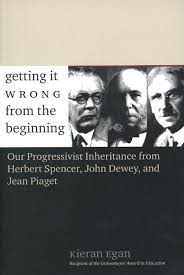
Consider the following. In his book, Getting It Wrong From the Beginning, author Kieran Egan tells of a study in education, conducted in the 1990s, that concluded the following: “To develop competence in an area of inquiry, students must (a) have a deep foundation of factual knowledge, (b) understand facts and ideas in the context of a conceptual framework, and (c) organize knowledge in ways that facilitate retrieval and application”. (168-9) Sound familiar? Does anything about those findings bother you?

Egan
For the record, Egan has been extremely valuable to me as I have tried to articulate the many problems I have had with reform in education as I have seen it practiced both throughout my career in the classroom and while I was a member of the provincial government. In both instances, I watched enormous resources brought to bear in ways that have, to my mind, done little more than further complicate a situation that was exceedingly complicated to begin with.

So what about the study Egan notes? If you are lost within the language employed in reporting the results, wondering what the problem is, or simply curious, consider the following: what does it mean to be “competent in an area of inquiry”, maybe botany, let’s say? I admit I don’t know much about the subject but someone judged competent would, I think, need to know many things about plants since botany, by definition, is the science of plant life. A working knowledge of biology would seem essential as well since botany is a more specialized pursuit within the larger field. Finally, if someone were judged competent, I think we would need to see proof of some kind, whether through good advice on how to grow my geranium or an explanation, maybe, of why some plants need more sunlight than others.

Botanist
I’ve tried to abbreviate an example that Egan takes far more time explaining but I’m hoping my version will suffice. The study I’ve noted represents just one brand of educational research with which I have a problem. If you take a look at the “conclusions” reached through the research, the “findings” could quite properly appear in a dictionary defining “competence in an area of inquiry”. In other words, a study was undertaken to prove that competence is properly defined as competence. While I cannot point to a specific “study”, I’m pretty sure there are any number of them out there that have spent enormous sums of money and considerable time proving that young people who are read to frequently and who are raised in a home where a great deal of reading material is available are more likely to be good readers.

The fourth chapter concerns the teacher and the classroom and notes that an indisputable conclusion of research is that the quality of teaching makes a considerable difference in children’s learning.
– from the abstract for “Becoming a Nation of Readers: The Report of the Commission on Reading” (1985)

If any or all of these examples strike you as absurd, welcome to one manifestation of educational research: that which purports to lend the weight of scientific validation to an already established definition or a commonly understood reality. The fact that someone perceives a need to provide such a thing is as frustrating to me as the fact that it can gain acceptance and validation among those commonly tasked with making decisions that have an impact on so many facets of our public schools. The determination to forego any comment on educational practice unless “data” accompanies the comment leads naturally to my next point.

If, like me, you have spent any time trying to offer alternatives to certain practices and/or trends in education these days, you have, no doubt, been questioned regarding data. The thing is, I don’t really mind the question; rather, my issue is how one defines “data”.

Some 7 or 8 blogs ago I started in on this issue and I warned any potential readers that this was going to be long. Now, however, I can circle back to a point I tried to make early in the argument: avenues to understanding and to action should not be restricted to those things bounded by a model of research that is either ineffective or inapplicable. Education has been subjected to a bevy of research that imagines “learning” can be understood in much the way a physicist might determine the conditions under which water can be brought to a boil. Can it?

boiling water
In the latter example, the scientist can do something that, to my mind, is impossible in education: control the variables. Even then, the identification of the variables can be more complicated than we might assume: what vessel is being used to hold the water? At what atmospheric pressure is the experiment being conducted? What is the temperature in the surrounding environment? My guess is, a proper physicist might have a few more questions that I wouldn’t think of.

In the educational example, how can we even begin to identify the variables? The scientific method demands that a hypothesis, followed by observation, lead to some statement regarding the truth or falsity of the hypothesis. In social science research, rather than an absolute proof, trends and/or possibilities might be the result. The problem remains the same, however: supportable results, within the necessarily limiting confines of traditional scientific research methods, demand a control of variables. In something as complex as a classroom, how could that ever be deemed possible?

One technique is to narrow the focus. Consider: a special class is established to help students who did poorly on a standardized exam, specifically to prepare them for the next administration of that exam so that they might do better. Lo and behold, a year later, students rewriting the exam do better. The conclusion? The intervention (creation of this special class) worked.

statistics
I won’t even try to list the many factors which might have had an impact on the improved results. Suffice to say that, to my mind, claiming that the improved results are directly attributable to the class that was established is roughly equivalent to suggesting that a certain team won the Stanley Cup because the guy who scored the crucial goal just got married and that made him a better goal scorer.

In the quotation I provided at the outset, a character in Nicole Krauss’s novel questions whether we can really have a word for everything. Are there elements of human experience that are truly inexpressible? Personally, I think there are but that’s a topic for another time, perhaps. I chose the line because it hints at another problem: what if we give a name to something without being entirely able to say exactly what we intend, even when we have a definition? “Education” is just such a word.

The devil’s in the data

Data is not information, information is not knowledge, knowledge is not understanding, understanding is not wisdom.
– Clifford Stoll

Data 3
I feel the need to do a bit of a recap at this point, just because the argument I’m trying to make demands so much background. First, I contend that society’s embracing of science as the truest measure of the truth or falsity of something has had unintended negative consequences. Overall, I am a great believer in the power of science to illuminate a great many dark corners in human understanding. That being said, I do not believe it is the lone measure or revealer of truth and/or understanding. It may seem old-fashioned to some, but I believe in intuition, personal experience, imagination, insight, judgement et al as alternative – and sometimes superior – avenues to understanding, as well as sufficient foundations upon which to consider certain actions based on any one, or a combination, of the same. In other words, actions can be considered reasonable and necessary sometimes, even if we don’t have “empirical data” (assuming all things can be reduced to the empirical) to support them. Subjective analysis can sometimes trump the objective.

Second, the overarching confidence we have come to have in scientific and technological innovation to promote “improvement” in society and in our individual lives has morphed into an ideology without our noticing. The orthodoxy of this “techno-faith” allows the adherents to dismiss any assertion or comment that is not supported by “research” or “data”. To clarify, I’m not suggesting that we dispense with either; good research is what leads to advance and innovation, and data, when valid, can serve us well. Unfortunately, in our simplistic encounters with these things, objections need be little more than tag lines to shut down the opposition. If you happen to be a teacher these days and you’ve had questions about certain programs or policies you’ve probably had the experience of raising your concerns with one of the theorists or “specialists” only to be greeted with a sentence that begins: “but the research shows . . .”

Which leads nicely to my third point, namely, that those who appeal to the research are asserting, through such an exclamation, their role as “experts’. It wouldn’t matter if the person asking the question had thirty or more years as a classroom teacher upon which to base a quibble, question or challenge; if the research says something else is true, personal experience cannot offer an alternative interpretation, nor can it qualify data-driven claims. The empirical result trumps all and it is to that “empiricism” I now wish to turn.

quanta
Scientific “truth” achieves such status when the outcome of a particular observation proves to be repeatable, regardless of who is doing the observing. The core concept at work here is the scientific method, which says, at its most basic: hypothesize, test, conclude. If we are dealing with the physical world, regardless of size, I have no quibble. If physicists tell me that everything in the universe is built on something called quanta, I’ll take their word for it. When educational theorists, on the other hand, tell me they have discovered the solution to a given educational dilemma and, further, that they have the research to support their claims, it takes significant will power not to immediately snort with derision (a battle I’ve been known to lose).

Key to the validity of any scientific experiment is control of the possible factors that could affect whatever is being tested. If you’ve seen the movie “The Fly”, you have an exaggerated example of what can happen when something unaccounted for ends up in the mix. If you don’t know the film, the scientist is seeking to teleport from location A to B. A fly manages to enter the teleportation chamber and, in the process of being dismantled and then reassembled, fly and human DNA end up mingling. The result, of course, is horrifying, to say the least. An exaggeration, yes, but still a useful illustration of the importance of accounting for all pertinent factors. Such accounting has always been recognized as problematic in the hard sciences but, even more so, in the soft sciences, what we all know as the social sciences.

Data 1
Most people who have attended university probably took some kind of introductory course in psychology or, maybe, sociology. If so, you would have learned about probabilities, trends and the like. History, once the bastion of irrefutable truth in the minds of many, has been recast as “historiography” in many instances, so as to acknowledge the interpretative element at work in any accounting of the past. “Research” in the social science context, does not pretend to provide absolutes; it works to continually refine understanding even as, at some level, it would argue that, when dealing with something as complex as human beings and human society, definitive and unassailable conclusions are pretty hard to come by, impossible to have, in fact.

Still, such subtlety is the preserve, for the most part, of the university and academic journals. In popular culture, to a greater or lesser degree, we have all become experts in psychology of some sort. Who has not spoken of – or been privy to someone else speaking of – what is or isn’t true when it comes to men and women? Each of us, at some time or other, I’m guessing, has made a statement something along the lines of: “oh, you know men/women; they’re just like that (whatever ‘that’ might be at that moment)”. I can’t blame anyone for feeling expert in this regard (we all have a lifetime’s experience of being one or the other, after all) but few would imagine, at the same time, that they are expert psychologists, in a developed sense.

data 2
Education presents a very special problem in the world of research and data. While social scientists may feel it necessary to qualify both expectations and results, they can still be fairly clear on just what it is they are examining: how do people react to certain stimulus alone? While in crowds? With friends? Strangers? But what happens when an entire research industry grows up around something that cannot easily be defined? As Hamlet says: ”Aye, there’s the rub.” (to be continued)

The rise (and fall) of expertise

Incestuous, homogeneous fiefdoms of self-proclaimed expertise are always rank-closing and mutually self-defending, above all else.
― Glenn Greenwald

Expert 1
Following from yesterday, I want to focus on the idea of expertise and the expert. Definitions of either tend to focus on excellence – in a specific, identifiable area or pursuit – of technique, skill, judgement and/or ability, ordinarily obtained through study or practice, or some combination of the two. If we happen to be interested in a particular sport, for example, and enjoy watching that sport on television, we might look to the opinion of those who have played the game, or been involved in it in some other way for many years, as more informed or thoughtful than we might expect ourselves to be. So it is that networks commonly empanel former players and coaches for commentary during intermissions or in the course of the game itself.

Don Cherry
Part of the entertainment inherent in such a process is the potential for disagreements that arises among the “experts”. We at home might weigh the merits of one commentator vs another with an eye to determining which one best supports our own assessment. No one would question your right, as a viewer, to think that any one – or even all – of those opinions expressed is wrong. Any sport, whether team or individual, involves too many factors for the result to be accounted for with absolute certainty. Yes, a game or a match between opponents adjudged to be in the same “league” can be subjected to a brand of expert scrutiny, but conflicting opinions of outcomes are what keep bookies in business.

The sports example stands in stark contrast to how we regard expertise in a field such as physics or, perhaps, cosmology. In either of those cases, if you are like me, I will acknowledge that I have some sense of what either pursuit is concerned with, but I would never presume to have anything to offer by way of insight or understanding in either area. Granted I took physics in school, and both physics and cosmology have been of interest to me throughout my life, but interest and familiarity, when it comes to things requiring deep and very specific knowledge, are entirely unlike expertise. I think most would readily agree with me.

Medicine is a more complicated case, as current controversy over vaccinations indicates. When it comes to things such as surgery, for any number of ailments, few would dispute the need for sufficient experience and training being required by the person performing the operation. If we know that Dr. ______ has performed _________ surgery 100 times and has a 99% success rate, we are liable believe he/she is a good choice for the procedure. Such considerations are not unlike the choice of a quarterback in a football game: the one with the best “stats” and proven results through many games will, no doubt, be the starter.

When it comes to treatment and diagnosis, however, in many instances these days, we are operating more in the realm of the commentators sitting around at intermission, i.e., everyone has an opinion and one person’s expertise is not necessarily the expertise of someone else. Practitioners of holistic medicine often find themselves at odds with university educated MDs. “Alternative” treatments for this and that can be found over the counter in most pharmacies and grocery stores, online, or advertised in magazines and on television. Claims are made for the efficacy of products and approaches too numerous to mention. And, routinely, the purveyors of these products are described (usually by themselves) as “experts”, sometimes because they have credentials (an MD, PhD or some other degree or certificate) that seem to support such a designation or simply because they have worked long and hard to develop whatever it is they are offering.

alternative medicine
The current concern over the anti-vaccine movement, and the parallel reemergence of diseases thought largely eradicated years ago, suggests that diluted notions of expertise and/or competence can have grave consequences. I’m sure the previous paragraph reveals my particular bias in this regard. While acknowledging that traditional, historical medical practices – as exemplified in our public health system – can be imperfect, I would still rather place my future in the hands of my cardiologist than those of my Naturopath (no, I don’t actually have one). Ideas of expertise, in this instance, are largely validated by the SCIENCE of medicine and the data that clinical trials, and other such experimental methods, provide. Certain “alternative” activities gathered under the umbrella of ”medicine” may be fine and good, but I view all such alternatives skeptically.

The examples I’ve used to this point, regardless of their differences, do have a common thread that differentiates them from my real concern: education. However much I might agree or disagree with the commentators, coaches and players of a sport, the desired end result is clear: to win the game. Similarly in “hard sciences” such as physics, cosmology, et al, even if “the answers” are, themselves, sources of ongoing debate and disagreement, the SEARCH for those answers is understood and shared. Even in medicine, where there can be so many disagreements regarding proper and improper treatments, diagnoses, approaches, drugs dispensed, etc., all are united in their understanding of the end goal: good health or health as good as is possible in the individual case.

In the beginner’s mind there are many possibilities, in the expert’s mind there are few.
-Shunryu Suzuki

Education is a far more complicated beast. Repeatedly we hear the mantra that virtually all of the world’s persistent problems – poverty, war, injustice, disease, social inequity and unrest, _____(fill in the blank)____ – can be solved through education. The thing is, I don’t think you need to be an expert to believe in the fundamental truth of that claim. That being said, problems arise when someone is tasked with the job of ensuring that education is deliberately applied to the achievement of very specific ends. And, in my experience, the insistence that education equals training leading to the completion of a specific task is just the beginning of a decline that continues to this day. Unfortunately, the continuing insistence that “experts” have problems in our educational system in hand, regardless of the many complaints parents, businesses and other groups within society might have, obscures that decline to the detriment of the system and to those it purports to serve. (to be continued)